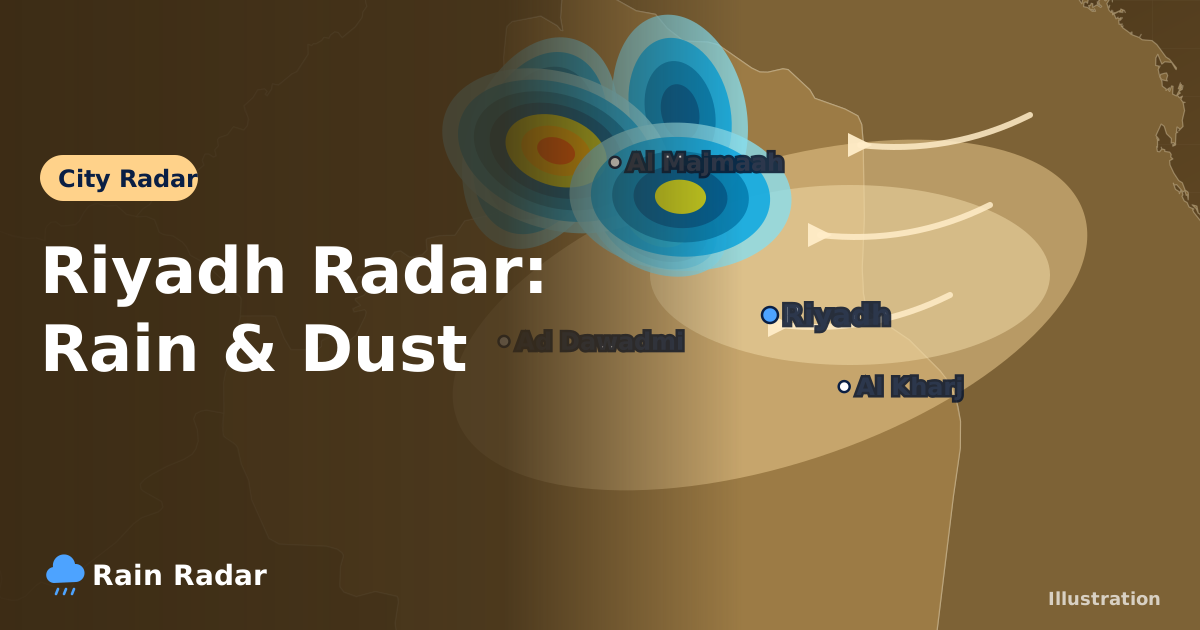
The Riyadh rain radar shows the rain observed over Riyadh and the surrounding area in the last two hours, in frames about 10 minutes apart, so you can see whether it is raining in Riyadh now and where the rain cells are heading. Most of Riyadh's rain falls roughly between November and April, with spring thunderstorms the most notable, while summer brings intense heat, dust and sandstorms.
Riyadh sits in the heart of Najd, far from the sea, so its weather is dry and changes sharply between seasons. This guide explains how to use the rain radar in Riyadh, when rain is most likely, and how to cope with dust and heat, with practical tips for residents, expats and visitors.
How do you check the Riyadh rain radar right now?
Open the live rain radar on our home page, zoom in on Riyadh in central Saudi Arabia, and follow these steps:
- Press play to watch rain over the last two hours; each frame is about 10 minutes.
- Read the colours: blue for light to moderate rain, yellow and orange for heavy rain, and red to pink for very intense rain that may bring thunder and hail.
- Follow the direction of the cells. Many rain systems in central Saudi Arabia move in from the west or north-west, although there are exceptions.
- Open Riyadh weather for the current temperature, hourly and 7-day forecasts, UV index, sunrise and sunset times, and air quality and dust.
Tip: spring thunderstorms can form and intensify in under an hour. If the forecast shows a chance of rain, check the radar every so often to see whether cells are starting to build west of the city.
When does it rain in Riyadh?
Riyadh is a desert city with little rain overall, and amounts vary greatly from one year to the next. Roughly:
| Season (approximate) | What to expect in Riyadh |
|---|---|
| Autumn (late October and November) | Coincides with the traditional Al Wasm season in the Najdi calendar; the first rains may arrive |
| Winter (December to February) | Scattered rain with passing low-pressure systems and cold nights, including the Murabbaniyah, traditionally one of the coldest spells |
| Spring (about March and April) | One of the likeliest times for thunderstorms and short heavy downpours, sometimes with hail and strong winds |
| Summer (about May to September) | Very hot and dry; rain is rare |
These divisions are approximate and rain can come early or late in any given year, so watch the radar and forecasts instead of relying on the calendar alone.
How to read the Riyadh radar on a stormy spring day
Take a general example: a spring day when the forecast shows a chance of thunderstorms over Riyadh in the late afternoon. A sensible way to follow it:
- Morning: check the hourly forecast on the Riyadh page for the likeliest hours of rain and expected wind strength.
- Early afternoon: open the radar and zoom out to see the area west and north-west of Riyadh. Look for small blue patches appearing and growing.
- As cells develop: if the patches turn yellow, then orange or red, track them between frames to estimate when they might reach your district.
- Before they arrive: expect dusty gusts ahead of the rain and finish any unnecessary trips early.
- After they pass: avoid tunnels and low roads until the water drains, as pools can linger.
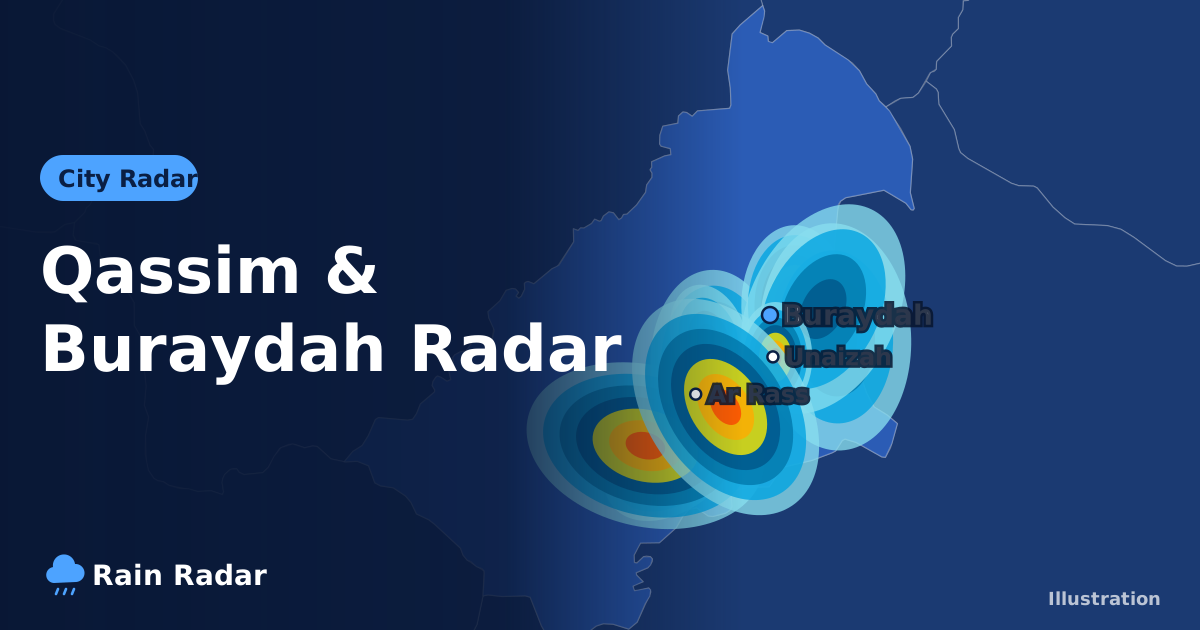
The same approach works for nearby cities in Qassim such as Buraydah, where spring rain behaves in a similar way.
Winter in Riyadh: cold nights and gentle rain
Some people are surprised that a city famous for heat has a properly cold winter. Being inland and far from the sea, Riyadh cools down a lot on December and January nights, and on some nights temperatures drop to just a few degrees above zero. Days are usually mild and sunny.
Winter low-pressure systems sometimes bring calm rain that lasts for hours, quite different from the short spring storms. On the radar this usually appears as wide blue areas moving slowly rather than small, brightly coloured cells.
Sandstorms and dust in Riyadh
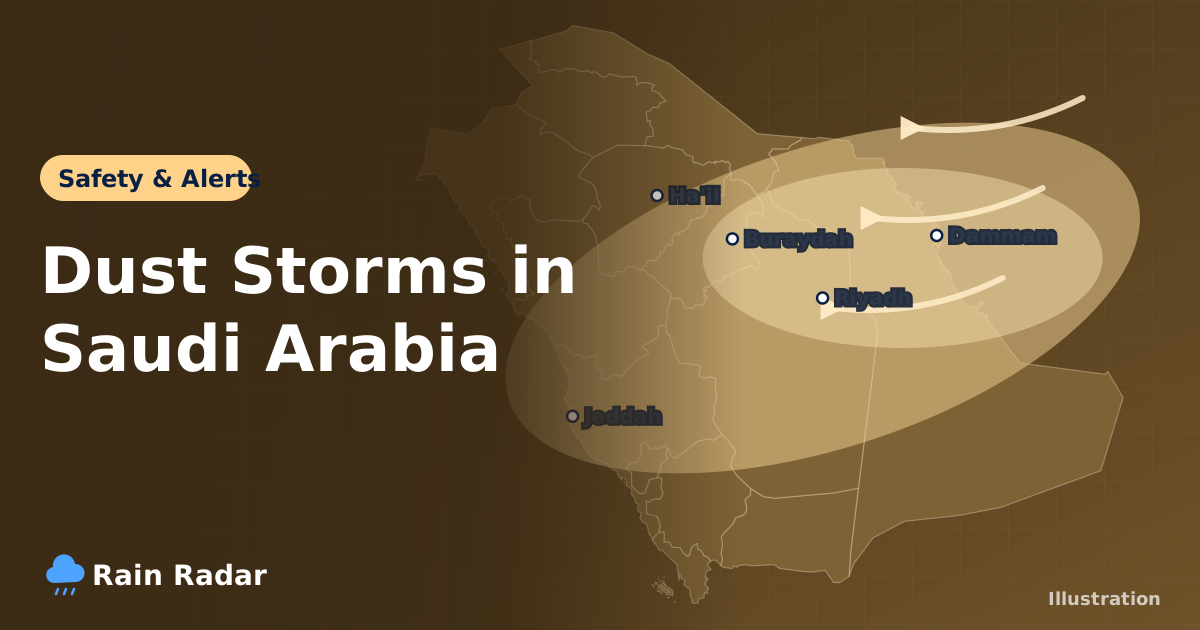
Dust is part of Riyadh's weather and can affect daily life more than rain does. Dust waves and sandstorms are most common in spring and early summer, when winds pick up over the dry land around the city.
Dust and the radar
A rain radar is built to detect water drops. It may occasionally pick up weak echoes from very thick dust, but it is not a dust measurement tool. For air conditions, use the air quality and dust card on the Riyadh page.
Dust ahead of a thunderstorm
Strong downdrafts in front of a thunderstorm can kick up a wall of dust, so visibility drops suddenly before the rain arrives. If strong cells are approaching on the radar and the air turns dusty, expect the weather to change fast.
What to do in a sandstorm
- Close windows and stay indoors as much as possible.
- If you have asthma or allergies, keep your medication with you and wear a suitable mask.
- When driving, slow down, use dipped headlights and increase your following distance; if visibility collapses, pull well off the road safely and wait.
Read more in our guide to dust storms in Saudi Arabia.
Summer heat, flash floods and desert trips
Riyadh summers are very hot and dry, and some days exceed 45°C. Low humidity makes sweat evaporate quickly, so you may not notice how much water you are losing. Nights stay warm because buildings and asphalt release stored heat, which is why many residents walk or exercise early in the morning. Avoid direct sun around midday, drink water regularly, check the UV index, and never leave children or pets in a parked car, even for a few minutes.
Although Riyadh is not a mountain city, heavy rain can flood tunnels and low roads, and valleys around the city such as Wadi Hanifa can run after downpours. Wadi Hanifa and the open desert parks (rawdat) around Riyadh are popular with families in winter and spring. Enjoy them with care: check the radar before setting out, never pitch a tent in a wadi or channel, never drive through running water, and head back early if strong cells are approaching.
Heading out of the city? Check your destination, such as Al Kharj to the south or Al Majmaah to the north, or browse all Saudi cities. Official alerts come from the National Center for Meteorology (NCM) and Civil Defense; our site shows observed radar and model forecasts only and does not issue official warnings.
Frequently asked questions
When is the rainy season in Riyadh?
Most of Riyadh's rain falls roughly between November and April, and spring months such as March and April are known for thunderstorms. Some rain can arrive in autumn with the traditional Al Wasm season.
Does dust show up on the Riyadh rain radar?
The radar is built to detect rain. Very thick dust can occasionally produce weak echoes, but the radar is not a dust tool. Use the air quality and dust card on the Riyadh weather page instead.
When are sandstorms most common in Riyadh?
Dust waves and sandstorms usually peak in spring and early summer, though they can happen at other times when winds are strong. Some arrive just ahead of thunderstorms as gust fronts.
How hot does Riyadh get in summer?
Riyadh summers are very hot and dry, and some days can exceed 45°C. Avoid direct sun around midday and early afternoon and drink water regularly, even if you do not feel thirsty.
Does this site issue official alerts for Riyadh?
No. The site shows observed radar rain and model forecasts only. Official alerts come from the National Center for Meteorology (NCM) and Civil Defense.
Sources: the National Center for Meteorology (NCM) for official alerts; RainViewer radar and Open-Meteo forecasts for the data shown on this site.