The Jazan rain radar is the quickest way to see where rain is falling right now across the Jazan region: open the live radar to watch rain cells move over the last two hours, in frames about 10 minutes apart. Unlike most of Saudi Arabia, Jazan gets rain in several seasons, with summer afternoon thunderstorms over the mountains the most typical, plus rain in spring and autumn.
This guide covers how to use the radar for Jazan city and towns such as Sabya, Samtah and Abu Arish, why the mountains and the coastal plain behave so differently, and how to stay safe when the valleys run.
How do you use the Jazan rain radar?
The radar shows rain that is actually falling now or fell minutes ago; it is not a forecast. That makes it the right tool when you want to know whether rain has reached your area, or whether storms are moving from the mountains towards the coast.
- Open the live rain radar and zoom in on south-western Saudi Arabia until you can see Jazan, the coastal strip and the mountains to the east.
- Press play to watch the last two hours, and note the direction and speed of the coloured areas.
- Read the colours roughly: light sky blue for light rain, blue for moderate rain, yellow and orange for heavy rain, and red to pink for very heavy rain, often with thunderstorms.
- Then open Jazan weather for the hourly forecast and the next 7 days.
Using both together is the right approach: the radar tells you what is happening now, and the city page shows what the weather models expect over the coming hours and days.
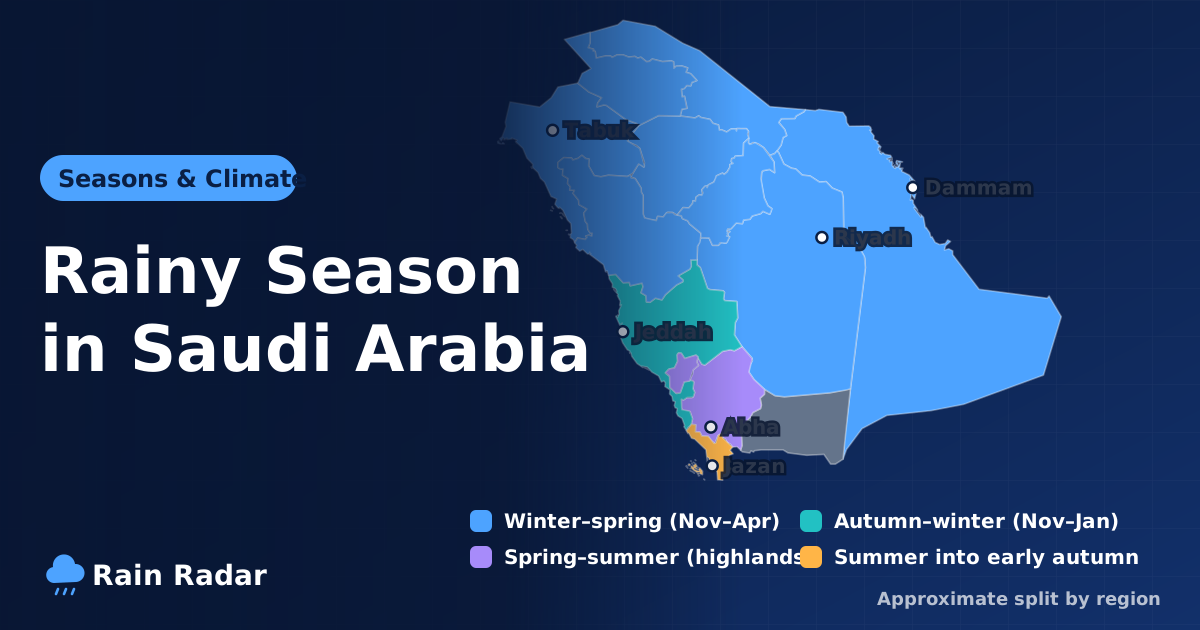
When is the rainy season in Jazan?
Jazan lies in the far south-west of the Kingdom. In summer it is influenced by moist air from the south and south-west, linked to the monsoon pattern that affects the southern Red Sea and Yemen. That is why Jazan differs from most of Saudi Arabia, where rain is concentrated in winter and spring.
In summer, towering clouds usually build over the mountains in the afternoon, and their rain can spread to the foothills and the plain by evening. Spring and autumn can bring other rain events, while the coast is relatively dry the rest of the time. Amounts and timing vary from year to year.
| Season (approximate) | What to expect in general |
|---|---|
| Spring | Scattered rain events, sometimes with thunderstorms, especially over the mountains |
| Summer | Afternoon and evening thunderstorms over the mountains that may reach the plain; hot and humid on the coast |
| Autumn | Some rain events continue as temperatures slowly ease |
| Winter | More pleasant on the coast; rain is less frequent but possible |
To compare with the rest of the country, read when the rainy season is in Saudi Arabia.
Coastal plain vs mountains
The coastal plain, known as Tihama, is hot and humid most of the year with less regular rain. The mountains to the east, such as the Fayfa range, are cooler and much wetter, because moist air rises up their slopes, cools and forms clouds. On the radar you can often see active cells over the mountains while the coast stays completely dry.
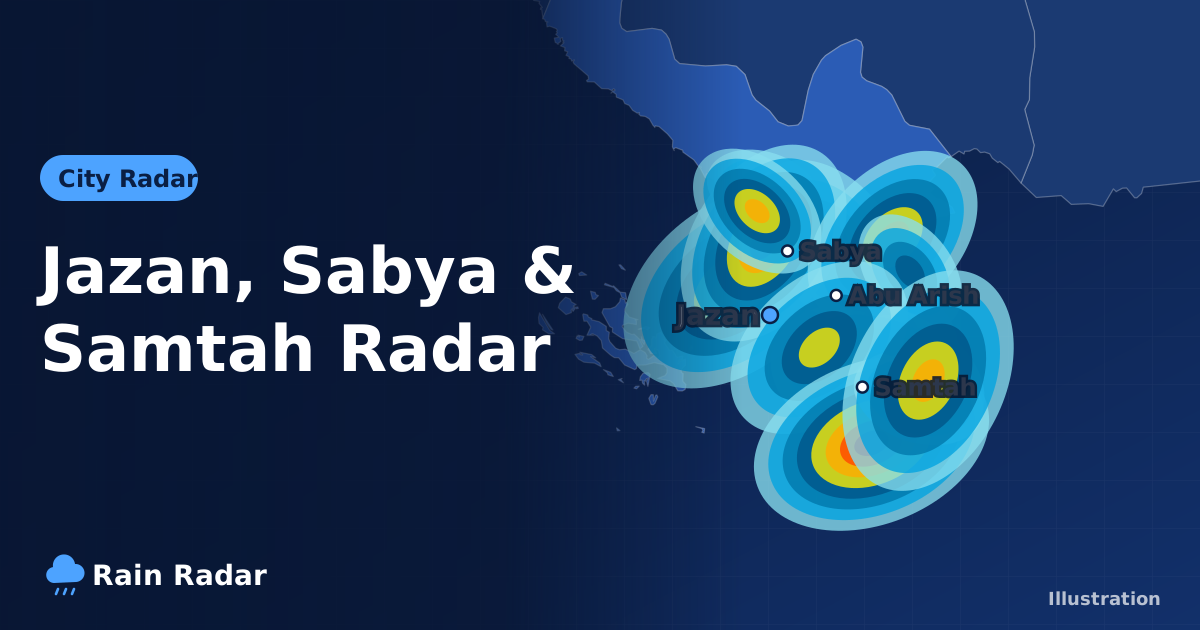
Weather radar for Sabya, Samtah and Abu Arish
The Jazan region includes many governorates, and each behaves a little differently depending on how close it is to the sea or the mountains. Storm cells here are often small and fast-forming, so one town can get a downpour while its neighbour stays dry.
- Sabya: north of Jazan city and close to valleys that drain the mountains. Follow Sabya weather and watch the radar over the high ground to its east.
- Samtah: in the south of the region near the border, and can be affected by clouds arriving from the south. See Samtah weather for details.
- Abu Arish: east of Jazan city and closer to the foothills. Abu Arish weather shows its temperature and hourly forecast.
Each of these pages shows current conditions, hourly and 7-day forecasts, the UV index, sunrise and sunset times, and an air quality and dust card.
Flash floods and wadis in the Jazan region
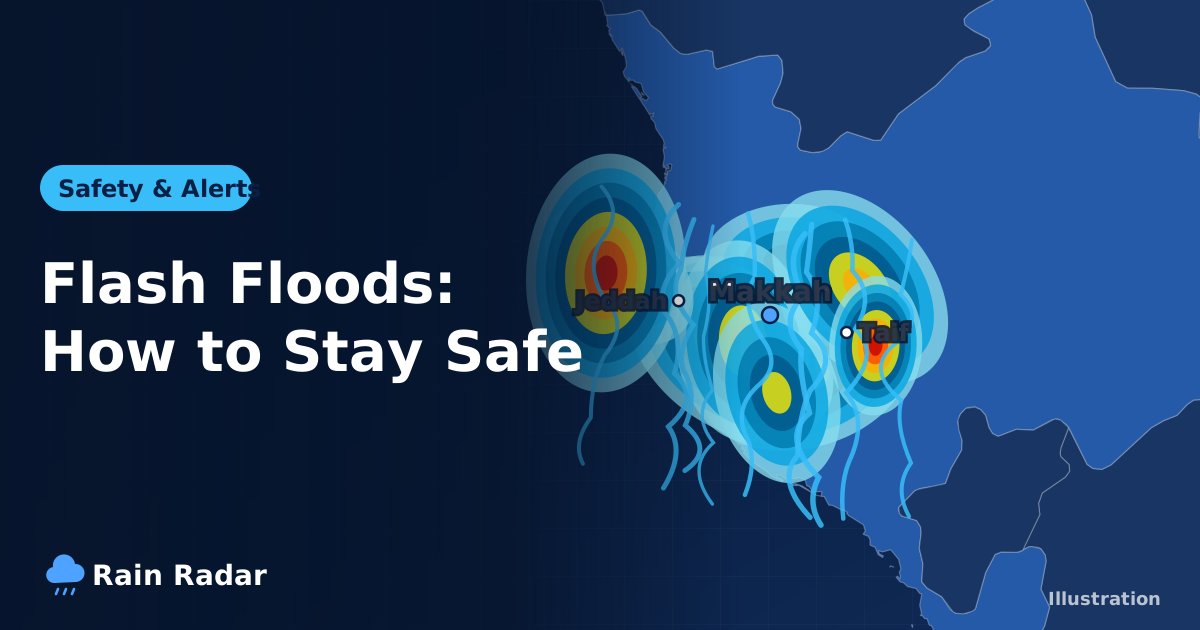
Many valleys run from the Jazan mountains down to the Red Sea, among the best known Wadi Jazan, Wadi Baish and Wadi Damad. When heavy rain falls on the high ground, water gathers fast and rushes down these channels, sometimes reaching parts of the plain where no rain fell at all.
This is where the Jazan radar earns its place. If yellow, orange or red cells sit over the mountains for a while, the valleys may run later, even if the sky above you is clear.
- Never cross a running wadi by car or on foot, however shallow the water looks.
- Do not camp or stop in valley beds during the rainy season.
- Keep away from low ground, standing water and electricity poles during thunderstorms.
- Follow instructions from Civil Defense and the authorities immediately.
For the causes of flash floods and the full safety rules, read flash floods in Saudi Arabia.
Where do official weather warnings for Jazan come from?
Our site does not issue official warnings. What we show is rain observed by radar and forecasts from weather models: helpful for everyday decisions such as delaying a trip or changing your route.
Alerts and early warnings for the Jazan region come from the National Center for Meteorology (NCM), and Civil Defense issues safety and evacuation instructions when needed. Follow their official channels, turn on alerts on your phone, and always treat them as your first reference.
Tip: when an official rain alert is issued for Jazan, open the radar to see where the cells are now and which way they are moving. It helps you understand the alert and estimate when rain might reach you.
Heat, humidity and dust in Jazan
Jazan's weather is about more than rain. In summer the coast is hot and very humid, so it feels hotter than the thermometer says, and the UV index is high most of the year. Dust can also affect the region when winds are strong. The air quality and dust card on each city page helps if you have asthma or allergies, and the UV index helps you pick the best time to go out.
Quick tips for using the radar in Jazan
- Play the full loop before judging; a single frame does not show direction.
- On summer afternoons, watch the eastern mountains, where storms usually start.
- Remember that mountains can interfere with the radar, so an empty map over rugged terrain is not proof that it is dry.
- Compare the radar with the hourly forecast to see whether an event is building or easing.
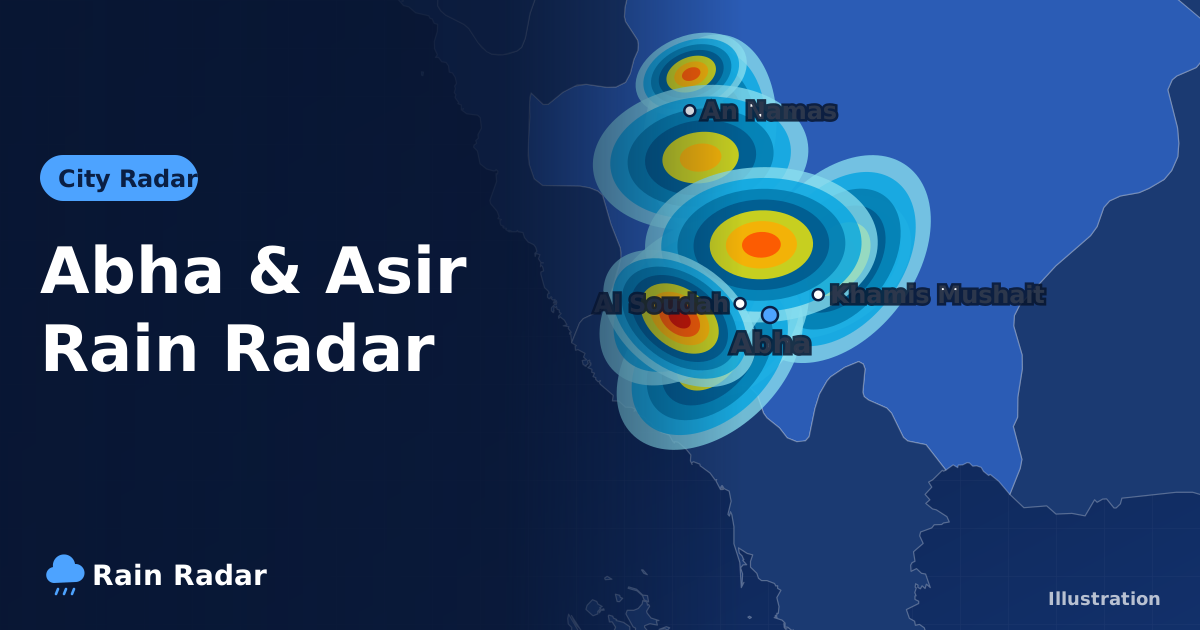
- For the mountains next door, see our Abha and Asir rain radar guide.
Frequently asked questions
How can I tell if it is raining in Jazan right now?
Open the live radar on our home page, zoom in on south-western Saudi Arabia and press play to watch rain from the last two hours. Coloured areas over Jazan mean the radar is detecting rain that is actually falling.
When is the rainy season in Jazan?
Jazan gets rain in more than one season. The best known is summer, when afternoon thunderstorms build over the mountains and can spread to the plain, but spring and autumn also bring rain. Amounts and timing vary from year to year.
Why can a valley flood in Jazan when the sky above is clear?
Heavy rain can fall on the eastern mountains and then rush down the valleys onto the coastal plain, reaching places where no rain fell. That is why you should watch the radar over the mountains, not just over your own location.
Are there weather pages for Sabya, Samtah and Abu Arish?
Yes. Each has its own page with current conditions, hourly and 7-day forecasts, UV index, sunrise and sunset times, and air quality and dust.
Does this site issue official warnings for the Jazan region?
No. The site shows observed radar rain and model forecasts only. Official alerts and early warnings come from the National Center for Meteorology (NCM) and Civil Defense.
Sources: the National Center for Meteorology (NCM) for official alerts; RainViewer radar and Open-Meteo forecasts for the data shown on this site.