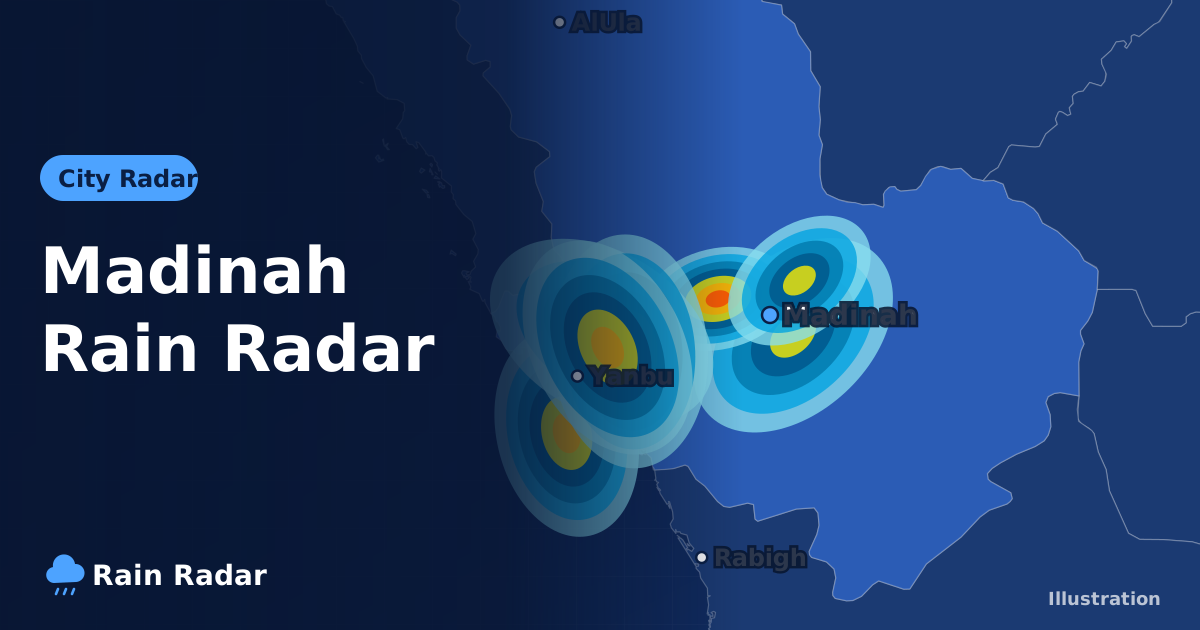
The Madinah rain radar shows the rain observed over Madinah and the surrounding area in the last two hours, in frames about 10 minutes apart, so you can see whether it is raining now and which way the clouds are moving. Most of Madinah's rain falls roughly between November and April as scattered showers, while summer is usually hot and dry.
Madinah welcomes millions of visitors every year, and its weather is different from Makkah and Jeddah because it lies farther from the sea and higher above it. This guide explains how to follow the rain radar for Madinah, when rain is most likely, and how to prepare for each season.
How do you use the Madinah rain radar?
To check the rain situation in Madinah right now, open the live rain radar on our home page, then:
- Zoom in on the Madinah region in north-western Saudi Arabia.
- Press play to watch the last two hours, with each frame about 10 minutes apart.
- Read the colours: blue means light to moderate rain, yellow and orange mean heavy rain, and red means very intense rain.
- Open Madinah weather for the current temperature, hourly and 7-day forecasts, UV index, sunrise and sunset times, and air quality.
Tip: if you plan to go out after Asr prayer or in the evening, look at the hourly forecast, because showers and thunderstorms in the region sometimes build during the afternoon.
When does it rain in Madinah?
Rain in Madinah is limited overall, like most desert regions, but it is not rare. A rough picture of the year:
| Season (approximate) | What to expect |
|---|---|
| Late autumn (around November) | The first rain events of the season may arrive with unsettled weather |
| Winter (about December to February) | Occasional rain with passing low-pressure systems; cool nights |
| Spring (about March and April) | Often unsettled; thunderstorms with gusty winds are possible |
| Summer (about May to September) | Hot and mostly dry; rain is uncommon |
Madinah's rain usually comes in one of two forms. In winter, low-pressure systems can bring fairly steady rain that lasts for hours; on the radar it appears as wide blue areas moving slowly. In spring and autumn, short, strong thunderstorms can develop during the day and show up as small cells that quickly turn yellow and orange.
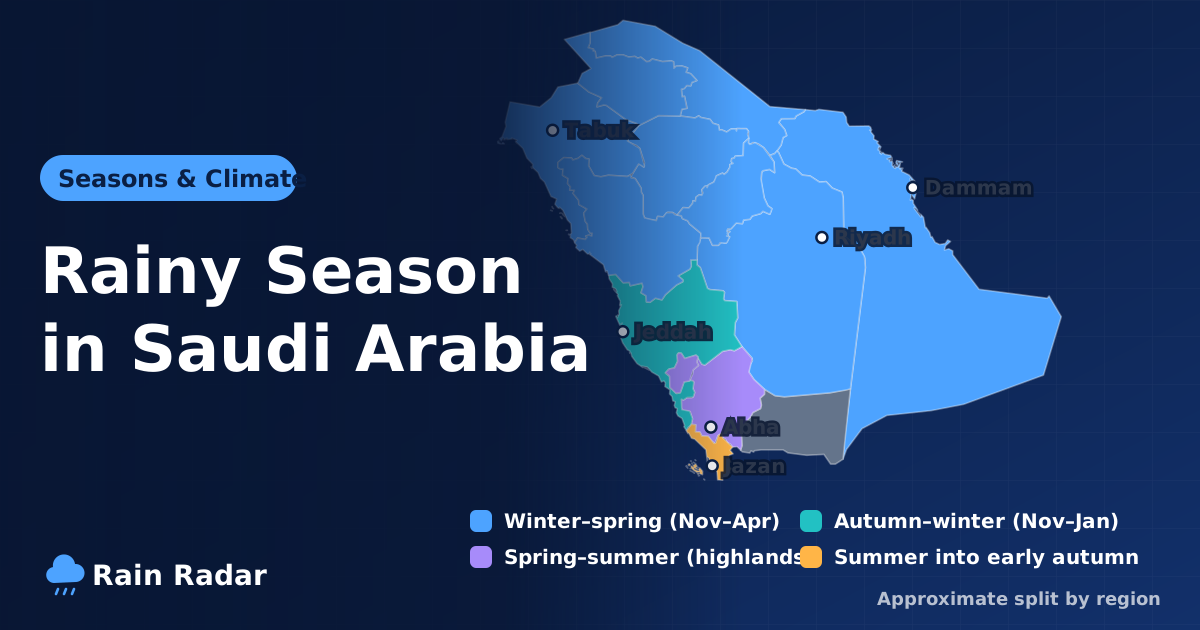
Years differ a lot: some winters pass with hardly any rain, while others bring several events. To compare Madinah with other cities, read when the rainy season is in Saudi Arabia.
How to read the radar over Madinah on an unsettled day
Look around the city, not just at it
Rain cells may form over the lava fields (harrat) and hills near Madinah before they reach the residential districts, and some will pass beside the city without raining on it. Zoom out a little to see the wider area and the general direction of movement.
Tell rain from clutter
A coloured dot that stays fixed in every frame is probably a ground echo from hills or buildings, not rain. Real rain moves and changes shape and intensity from one frame to the next.
Combine radar and forecast
The hourly forecast on the Madinah page tells you the chance of rain in the coming hours, and the radar confirms whether it has started. If the forecast shows rain but the radar is still empty, keep checking, because cells may form later in the day.
Madinah weather in summer and winter
Madinah sits inland, a few hundred metres above sea level, so it combines a hot desert summer with relatively cool winter nights, and the gap between day and night temperatures can be noticeable.
Summer
Summers are hot and dry, and some days can go above 45°C. Humidity is much lower than on the coast, but the sun is strong and the UV index is very high around midday.
Winter
Winter days are pleasant, but nights can be chilly compared with Makkah and Jeddah, and many visitors are surprised by how fast the temperature drops after sunset. For more on the season, read about winter in Saudi Arabia.
Dust and wind
Madinah is sometimes affected by dust that reduces visibility, especially in spring and early summer. The air quality and dust card on the city page is useful for anyone with asthma or allergies.
Valleys and flash floods in Madinah
Madinah is ringed by volcanic lava fields and hills, and several historically famous valleys run through it, such as Wadi Al Aqiq. When heavy rain falls on the surrounding high ground, these valleys can flow even if the rain in the city itself is light.
So do not judge only by the sky above you. If the radar shows orange or red cells over the surrounding area, expect water in low channels. Always remember:
- Never cross a running wadi on foot or by car, however little water there seems to be.
- Do not camp or picnic in valley beds on unsettled days.
- Avoid tunnels and low roads during heavy rain.
- Follow Civil Defense instructions as soon as they are issued.
A valley can keep flowing for hours after the rain stops, and the sight draws crowds. Enjoy it from a high, safe spot; going near the edge or into the channel is a real danger, because earth banks can collapse and the current is often stronger than it looks. Our guide to flash floods in Saudi Arabia covers the safety rules in full.
Weather tips for visitors to Madinah
Many visitors prefer winter and early spring for the mild daytime temperatures, while preparing for cool nights and the odd shower. In summer, the heat means planning your movements carefully. Either way:
- Check the radar and forecast before visiting open-air sites such as Mount Uhud or Quba Mosque.
- In summer, move around early in the morning or in the evening, drink water regularly and use a sun umbrella.
- In winter, carry a light jacket for the evening.
- Take care on wet courtyards after rain, as they can be slippery.
- Continuing to the coast or the north? Check Yanbu weather or AlUla weather before you travel.
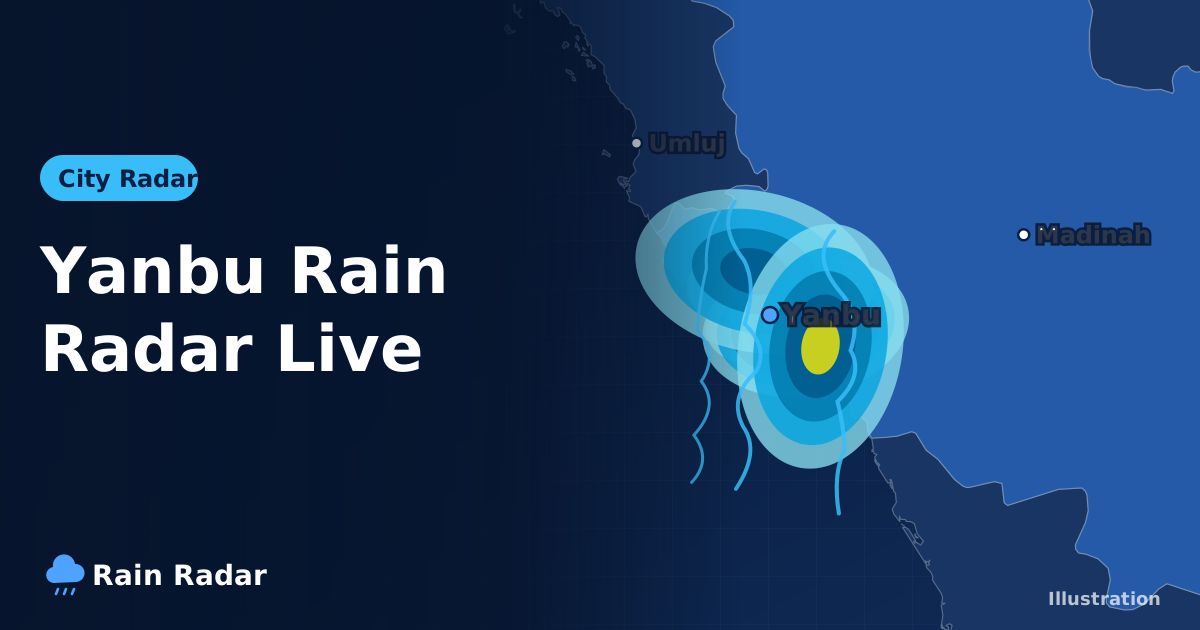
If you are travelling between Madinah and the Red Sea coast, our Yanbu rain radar guide explains how rain behaves on the nearby coast.
Madinah rain radar and official alerts
Our radar shows observed rain and the Madinah page shows model forecasts, but the site does not issue official warnings. Alerts and early warnings come from the National Center for Meteorology (NCM), and safety instructions during rain come from Civil Defense. Browse all Saudi cities to follow the weather anywhere else on your trip.
Frequently asked questions
When is the rainy season in Madinah?
Most of Madinah's rain falls roughly between November and April, usually as scattered showers or short thunderstorms. Amounts vary a great deal from year to year, and summer is normally hot and dry.
Is it cold in Madinah in winter?
Winter days are usually mild and sunny, but nights can feel chilly, especially in December and January, because Madinah is inland and a few hundred metres above sea level. Visitors should pack a warm layer for the evenings.
How can I see if it is raining in Madinah right now?
Open the live rain radar on our home page, zoom in on Madinah and press play to watch the last two hours of rain in frames about 10 minutes apart. The Madinah weather page shows current conditions and forecasts.
Do the valleys in Madinah flood?
Yes. Valleys such as Wadi Al Aqiq can run after heavy rain on the surrounding high ground, even when rain in the city is light. Keep away from running channels and follow Civil Defense instructions.
Does this site issue official weather alerts for Madinah?
No. The site shows observed radar rain and model forecasts only. Official alerts come from the National Center for Meteorology (NCM) and Civil Defense.
Sources: the National Center for Meteorology (NCM) for official alerts; RainViewer radar and Open-Meteo forecasts for the data shown on this site.