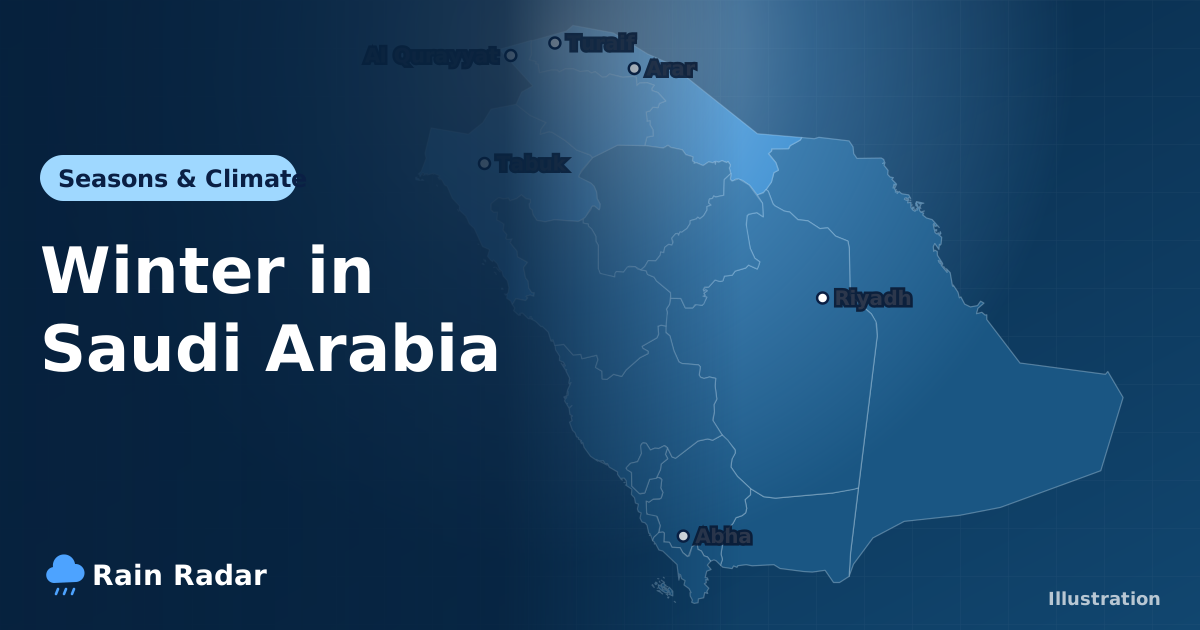
Winter in Saudi Arabia officially begins around 21 December, but the cold is felt from late November, and the main winter months are December to February, with January usually the coldest. It is cold and sometimes freezing in the north (Turaif, Al-Qurayyat, Tabuk) and the southwestern highlands, mild by day with chilly nights in Riyadh and the centre, and warm and pleasant on the coasts in Jeddah and Jazan. It is also the rainy season for many regions.
For many residents and visitors, winter is the best season of the year: the heat is gone, the desert is inviting, and parts of the country go green after rain. Here is what to expect, region by region.
When does winter start in Saudi Arabia?
There are several ways to define the start of winter, and each is valid from its own angle:
- Astronomical start: the winter solstice around 21 December, the shortest day of the year in the northern hemisphere.
- Meteorological start: many forecasters treat December as the first month of winter and February as the last.
- Traditional start: in the Najdi folk calendar, Al-Murabba'aniyah begins in early December and lasts about 40 days; it is seen as the heart of winter.
In practice, people in the north and centre notice cold nights from November, while on the west and south coasts the cold comes later and may barely arrive at all.
Winter months and the traditional cold seasons
December, January and February are the core winter months, and January is usually the coldest. Cold weather can linger in the north and in the mountains into March.
In Najd and Qassim, many people still describe winter using the traditional calendar. Its dates are approximate, not official:
- Al-Murabba'aniyah: about 40 days from early December; the start of the hard cold.
- Ash-Shabt: about 26 days after that, known for its bitterly cold nights.
- Al-Aqarib: about 39 days, as the cold gradually breaks with wind and changeable weather.
Where is the coldest place in Saudi Arabia in winter?
The north: Turaif, Al-Qurayyat and Tabuk
The Northern Borders, Al-Jouf and Tabuk regions are the coldest in the Kingdom. In Turaif, Al-Qurayyat and Arar, night temperatures can drop below freezing on some January nights, leaving frost on the ground and on cars in the morning.
Tabuk is known for very cold nights, and in rare cold spells snow falls on some of the region's mountains, drawing visitors from across the country.
The southwestern highlands
Although they are in the south, the altitude of Abha, An-Namas, As-Sawdah and Al-Baha makes winter nights cold, and fog is common. Check Abha weather before planning a winter trip south.
Riyadh and the centre
In Riyadh, Buraydah and Hail, winter days are usually sunny and pleasant, but nights are cold and can get much colder when a cold wave arrives from the north. Winter is the favourite season for desert outings, known locally as kashta.
Winter on the coast: warm days and humidity
In contrast to the north, winter on the Red Sea coast stays warm and pleasant most of the time. In Jeddah, Yanbu, Rabigh and Al-Qunfudhah, days are sunny and mild and nights are fresh rather than cold, which makes the waterfronts popular in this season.
Jazan and its coast are among the warmest places in the Kingdom in winter, while the nearby mountains are far cooler. On the Gulf coast in Dammam, Al-Khobar and Qatif, winter is a little cooler than on the Red Sea, and damp northerly winds can make it feel colder than the thermometer suggests.
On all coasts, early-morning fog forms on some days, so take care on coastal roads and highways.
Cold waves in Saudi Arabia: why they happen and how to prepare
Cold waves happen when cold air masses flow south from the north. Temperatures drop noticeably within a day or two and brisk, cold northerly winds pick up. The effects can reach the centre and east, and sometimes, more weakly, the west coast.
Some winters are relatively mild and others bring several cold waves in a row. A cold wave often follows a rain system: once the clouds clear, nights get even colder. When one is forecast:
- Check your city's 7-day forecast to see which days will be coldest.
- Get heavy winter clothing ready, especially for children and older relatives.
- Protect sensitive plants from frost in the north.
- Check your car before long road trips, and watch for morning fog.
Safe heating in winter
One of the biggest winter dangers is burning charcoal or wood, or using some heaters, in closed rooms with poor ventilation. They can produce carbon monoxide, which has no colour or smell. Keep rooms ventilated, do not leave a heater running while you sleep, keep it away from curtains and furniture, and follow Civil Defense guidance.
Official warnings about cold waves and frost come from the National Center for Meteorology. This site does not issue warnings; it shows forecasts and observed rain only.
Does it rain in Saudi Arabia in winter?
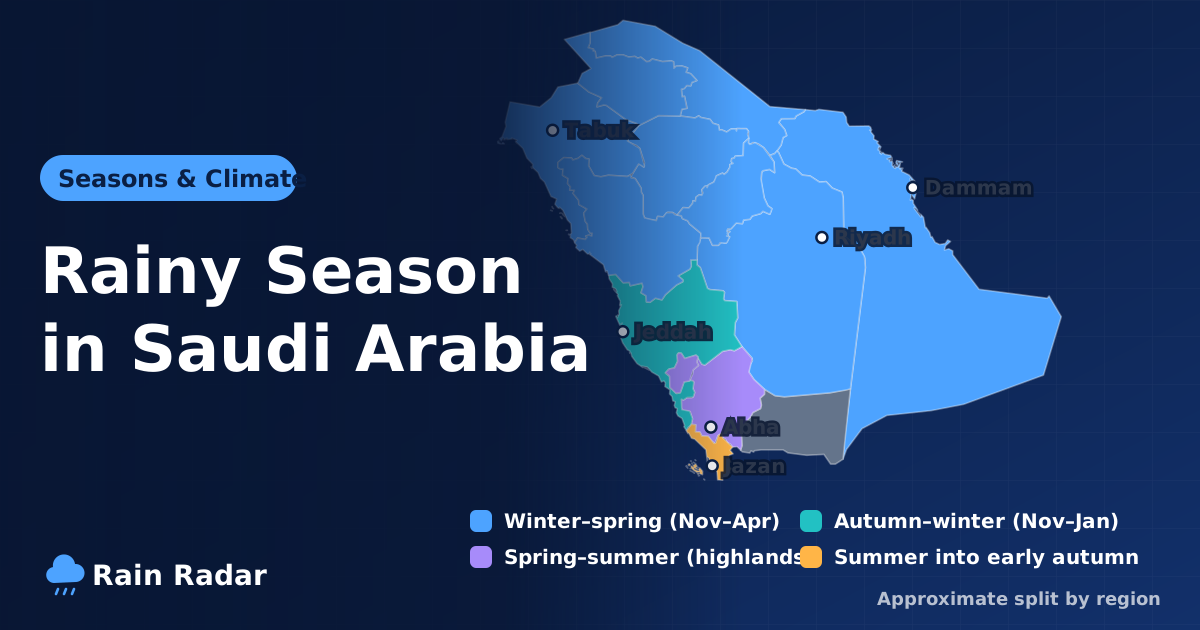
Yes. Winter is an important rainy season for many regions. The west coast, including Jeddah and Makkah, gets most of its limited rain between November and January, often as short, heavy showers that flood streets quickly; check Jeddah weather on rainy days.
The centre, north and east see winter rain systems from time to time, bringing scattered rain and sometimes hail, usually followed by a clear drop in temperature. In the north, rain can come with very cold air. Our guide to the rainy season in Saudi Arabia explains the timing for each region.
To follow any rain event, open the live rain radar and press play to watch the last 2 hours of observed rain in roughly 10-minute frames, or switch to the 7-day forecast maps to see what is coming.
Tips for enjoying winter in Saudi Arabia
Winter is the season for desert camping, road trips, and visits to the north and the coast. It is also when desert basins turn green after rain and the weather is right for walking and outdoor sport in most cities. To enjoy it safely:
- Looking for warmth? Head for the Red Sea coast or Jazan.
- Want real cold and a rare chance of snow? Go north, and prepare well for freezing nights.
- Never camp in a valley bed, even in clear weather; a wadi can flood from rain far away.
- Before you travel, check the city's page in all Saudi cities for current conditions, hourly and 7-day forecasts, and air quality.
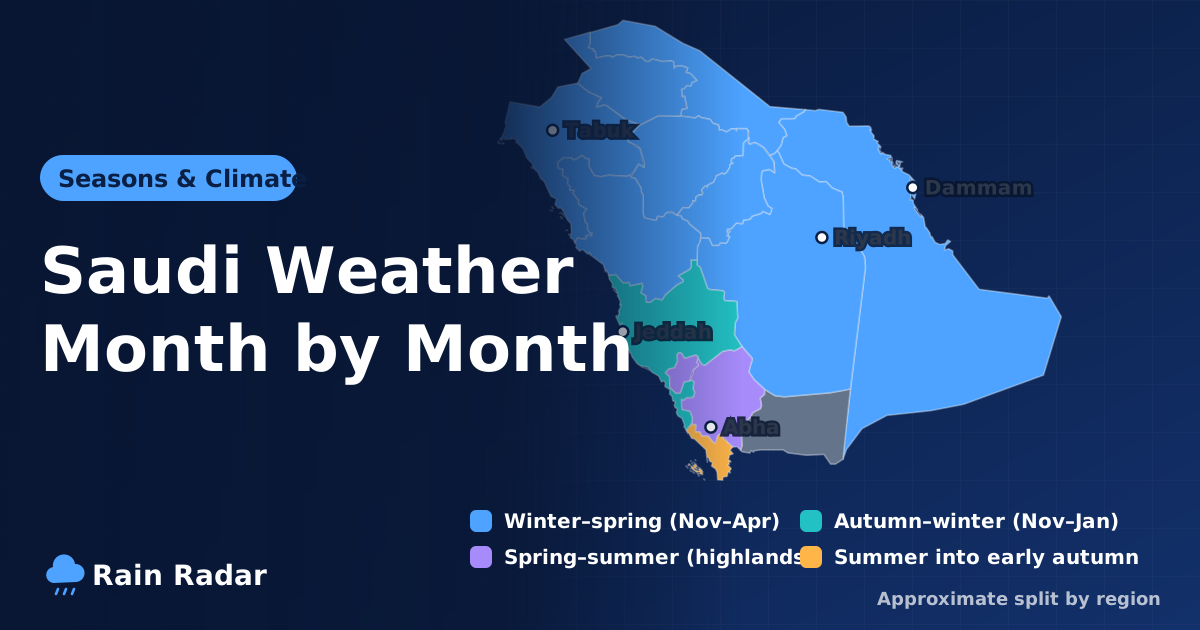
For how the weather changes through the year, read Saudi Arabia weather by month.
Frequently asked questions
When does winter start in Saudi Arabia?
Astronomical winter starts around 21 December, but the cold is usually felt from late November in the centre and north. The main winter months are December, January and February, and January is usually the coldest.
Does it snow in Saudi Arabia?
Yes, but rarely. Light snow occasionally falls on high ground in the Tabuk region and other northern mountains during cold spells. Most of the country never sees snow.
What is the coldest place in Saudi Arabia in winter?
The far north, including Turaif, Al-Qurayyat, Arar and the Tabuk region, is the coldest. Night temperatures there can drop below 0 °C on some January nights, with frost in the mornings.
Where is the warmest place in Saudi Arabia in winter?
The Red Sea coast, including Jeddah and Yanbu, and the Jazan coast are the mildest in winter, with sunny, warm days and pleasant nights.
What should I pack for winter in Riyadh?
Light layers for sunny, mild days plus a warm jacket for cold evenings and early mornings. If you plan a desert trip, pack extra warm clothing and blankets, as nights in the open desert get much colder.
Sources: the National Center for Meteorology (NCM) for official alerts; RainViewer radar and Open-Meteo forecasts for the data shown on this site.