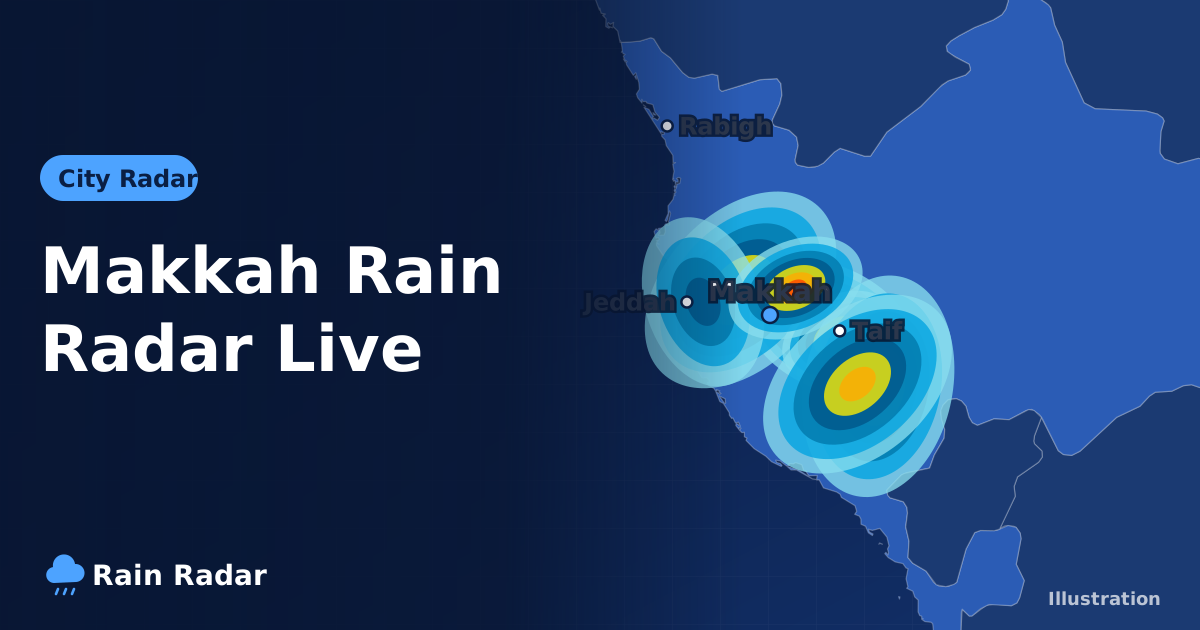
The Makkah rain radar shows the rain observed over Makkah and the surrounding mountains in the last two hours, in frames about 10 minutes apart, so you can check whether it is raining in Makkah right now and where the showers are heading. Rain here is infrequent and falls mostly from roughly October–November to January as short, sometimes heavy thunderstorms, and because the city sits among mountains, water gathers fast in valleys and low streets.
Millions of pilgrims, residents and visitors follow Makkah's weather all year, and interest jumps with every rain event. This guide shows how to follow the radar for Makkah, when rain is most likely, why rain here needs extra care, and practical tips for anyone performing Umrah or Hajj.
How do you check if it is raining in Makkah right now?
Open the live rain radar on our home page and zoom in on the Makkah region. Then:
- Press play to watch the last two hours; each frame covers about 10 minutes.
- Watch the direction of travel. Many thunderstorms form over the highlands east of Makkah, towards Taif and Al Hada, and then spread or drift towards lower ground.
- Open Makkah weather for the current temperature, hourly and 7-day forecasts, UV index, and air quality and dust.
- Heading to a nearby city? Compare Jeddah weather or Taif weather before you set off.
Reminder: the last radar frame is the latest observation, not a prediction. For the chance of rain in the coming hours, use the hourly forecast on the city page or the 7-day forecast layers on the radar map.
When is the rainy season in Makkah?
Makkah is hot most of the year and its rainfall is low and irregular. When rain does come, it is often a short, strong thunderstorm rather than a long steady shower. As a rough guide:
| Period (approximate) | Typical weather | Chance of rain |
|---|---|---|
| Late autumn to winter (about October/November to January) | Warm days, pleasant evenings | The most likely time for rain events in Makkah and western Saudi Arabia |
| Spring (about February to April) | Warming up, occasional unsettled spells | Scattered showers, less regular |
| Summer (about May to September) | Very hot; some days can exceed 45°C | Rare in the city, though storms may build over nearby mountains |
Makkah's rain is closely linked to what happens over the nearby highlands such as Taif and Al Hada, where altitude helps storms form more easily. Those mountains can get repeated rain while Makkah stays dry, but the runoff can drain westwards through the valleys.
This is only a general picture. Some years bring very little rain, others several events, so rely on the forecast and the radar rather than the calendar. To compare Makkah with the rest of the Kingdom, read when the rainy season is in Saudi Arabia.
Why does rain in Makkah need extra caution?
Makkah lies in rugged, rocky terrain cut by many valleys and narrow channels that drain towards lower ground. When heavy rain falls on the surrounding hills, little of it soaks in, so the water runs off quickly and can build into a strong flow within a short time.
Valleys and channels around the city
It does not need to be pouring over your street for water to reach you. Rain on the hills can arrive in low roads and tunnels minutes later. That is why the authorities always advise staying away from flood channels and never standing in or near a wadi bed during or after rain.
How the radar helps
Orange or red cells over the hills near Makkah are a sign that channels may start running, even if the sky above you looks fairly clear. Our guide to flash floods in Saudi Arabia explains this in more detail.
Rain safety tips for Umrah pilgrims and visitors
Many visitors come from countries where desert flash floods are unknown. These simple habits help you complete your rituals safely:
- Check the radar and forecast before heading to the Grand Mosque, the holy sites or historic places.
- In heavy rain, stay on higher, covered ground and avoid tunnels and low roads.
- Never try to cross standing water or a running channel on foot or by car, however shallow it looks.
- Marble floors and wet walkways become slippery, so walk carefully, especially with elderly companions.
- Follow the instructions of security staff, Civil Defense and the organisers in and around the Haram.
- On hot days, drink water regularly, use an umbrella for shade and check the UV index on the Makkah page.
To plan your trip by season and time of day, read our guide to Makkah weather for Umrah.
Reading the Makkah radar on a stormy afternoon: an example
Suppose the hourly forecast for Makkah shows a chance of afternoon thunderstorms. Here is how to use the radar step by step:
- Late morning: open the radar and confirm there are no cells nearby. On days like this the map is often clear in the morning.
- After midday: watch the highlands east and south-east of Makkah towards Taif. Small blue patches that start turning yellow mean a storm is growing.
- As it strengthens: if the patch turns orange or red, follow it frame by frame. Is it heading for Makkah or staying over the mountains?
- After the rain stops: do not assume the danger is over. Water can keep arriving through the channels for some time.
This is a general illustration, not a description of a specific event, but it sums up the right mindset: the forecast tells you the chance, the radar tells you what is actually happening, and the authorities tell you what to do.
What is Makkah's weather like through the year?
Makkah is known for its heat. Most months are hot and summer is very hot, with some days going above 45°C. Winter days are mild and the evenings are pleasant compared with central and northern Saudi Arabia.
Humidity is usually lower than in Jeddah because Makkah is inland, although it can rise when winds blow in from the coast. Dust episodes occasionally cut visibility, which is why the Makkah page includes an air quality and dust indicator.
Because Umrah happens year-round and Ramadan moves earlier by about 11 days each year with the Hijri calendar, your trip could fall in scorching summer or in the months when rain is most likely. Check Makkah's weather a few days before you travel, then follow the radar and forecast daily during your stay.
Makkah rain radar and official alerts
Our radar shows observed rain only, and the city page shows model forecasts. Warnings and early alerts come from the National Center for Meteorology (NCM), and evacuation and safety instructions come from Civil Defense. Use the radar to understand what is happening around you, and rely on the authorities for important decisions.
You can browse all Saudi cities to check the weather at your next stop, whether that is Madinah, Jeddah or Taif.
Frequently asked questions
When is the rainy season in Makkah?
Rain in Makkah mostly falls from late autumn into winter, roughly October or November to January, with occasional showers in spring. Totals are low and vary a lot from year to year, and rain often arrives as short, heavy thunderstorms.
How can I tell if it is raining in Makkah right now?
Open the live rain radar on our home page, zoom in on Makkah and press play to see rain from the last two hours in frames about 10 minutes apart. The Makkah weather page adds current conditions and an hourly forecast.
Is rain in Makkah dangerous for pilgrims?
The rain itself is usually brief, but Makkah sits among rocky mountains, so water collects quickly in valleys, tunnels and low streets. Stay on higher covered ground, never cross running water and follow Civil Defense and Haram staff instructions.
Can thunderstorms form quickly over Makkah?
Yes. In western Saudi Arabia storm cells can develop within a few hours, often in the afternoon over the highlands towards Taif. Checking the radar every so often on unsettled days is the best way to spot them early.
Does this site issue weather warnings for Makkah?
No. The site shows observed radar rain and forecasts only. Official alerts for the Makkah region come from the National Center for Meteorology (NCM) and Civil Defense.
Sources: the National Center for Meteorology (NCM) for official alerts; RainViewer radar and Open-Meteo forecasts for the data shown on this site.