Flash floods in Saudi Arabia happen when heavy rain falls in a short time on rocky or dry ground that cannot soak it up. The water collects in channels and valleys (wadis) and flows with enough force to sweep away cars and people, sometimes in places where it has not rained at all. The most important rule: never cross a flowing wadi. Follow alerts from the National Center for Meteorology (NCM) and Civil Defense early warnings, and use the rain radar to see where heavy rain is falling.
Many newcomers are surprised that a desert country can see dangerous floods. Understanding why they happen is the first step to staying safe.
Why do flash floods happen in Saudi Arabia?
The cause lies in the combination of ground and rain. In many areas the soil is rocky or baked hard by long dry spells, so rainwater does not sink in quickly. It runs off the surface towards the nearest low ground.
Rain in the Kingdom also often comes from thunderstorms that dump a large amount of water in a short time. When water from a wide area funnels into a single channel, a dry valley can turn into a fast river within minutes.
The role of wadis
Wadis are natural channels carved by water over thousands of years. They are dry most of the year, which is why some people underestimate them: they camp in them, build near them or drive across them. But a wadi always remembers its course, and when rain falls upstream, the water comes back.
The dangerous part is that a flood can reach you under a clear sky, because the rain fell on distant mountains or high ground where the valley begins. That is what makes flash floods in Saudi Arabia so unexpected.
- Follow official alertsFrom NCM and Civil Defense before you set out.
- Never cross a flowing wadiWater depth and force are deceptive, even when it looks shallow.
- Stay out of flood channelsDo not stop or camp in wadi beds or low ground.
- Watch the rain radarTo see where the rain clouds are and where they are heading.
- In an emergency call 998The Civil Defense number in Saudi Arabia.
Where are flash floods most common in Saudi Arabia?
Floods can happen almost anywhere, but some areas are more exposed:
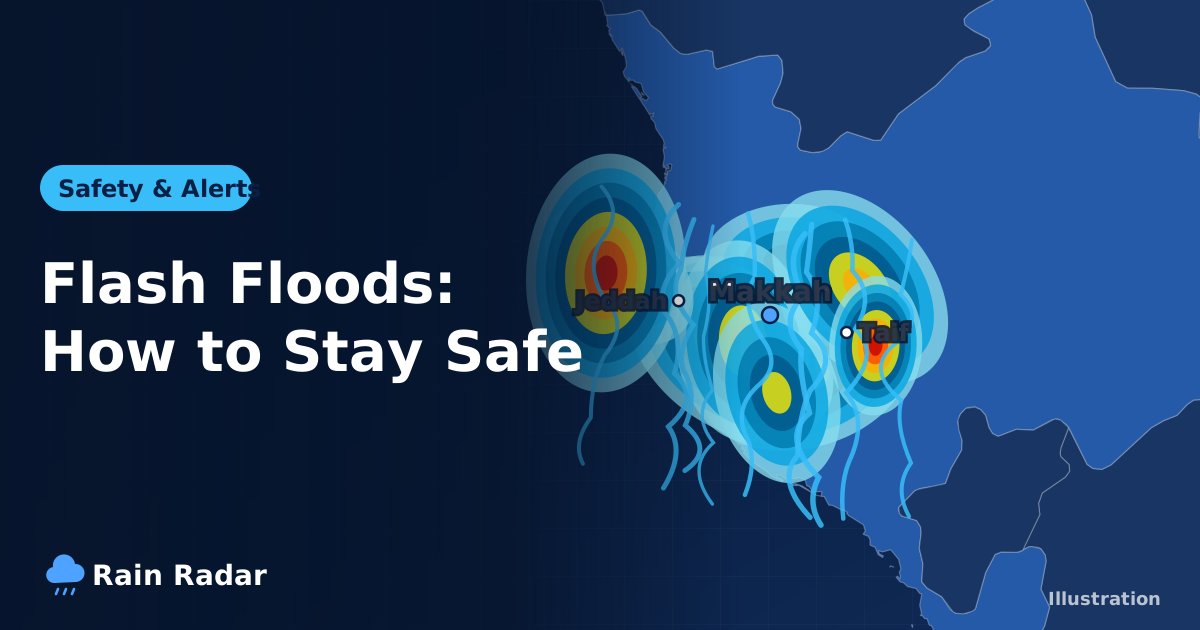
- West coast cities such as Jeddah, Rabigh and Al-Qunfudhah, where short heavy rain can collect quickly in low streets and districts. The Jeddah floods of November 2009 are one of the best-known examples.
- Makkah and its surroundings, because of the many mountains and valleys that slope towards the city.
- The southwestern highlands of Asir, Al-Baha and Jazan, where thunderstorms are frequent in spring and summer and wadis drop steeply towards the plains.
- The centre and north, where channels in Najd, Qassim and Hail flow after spring thunderstorms and sometimes cover desert roads.
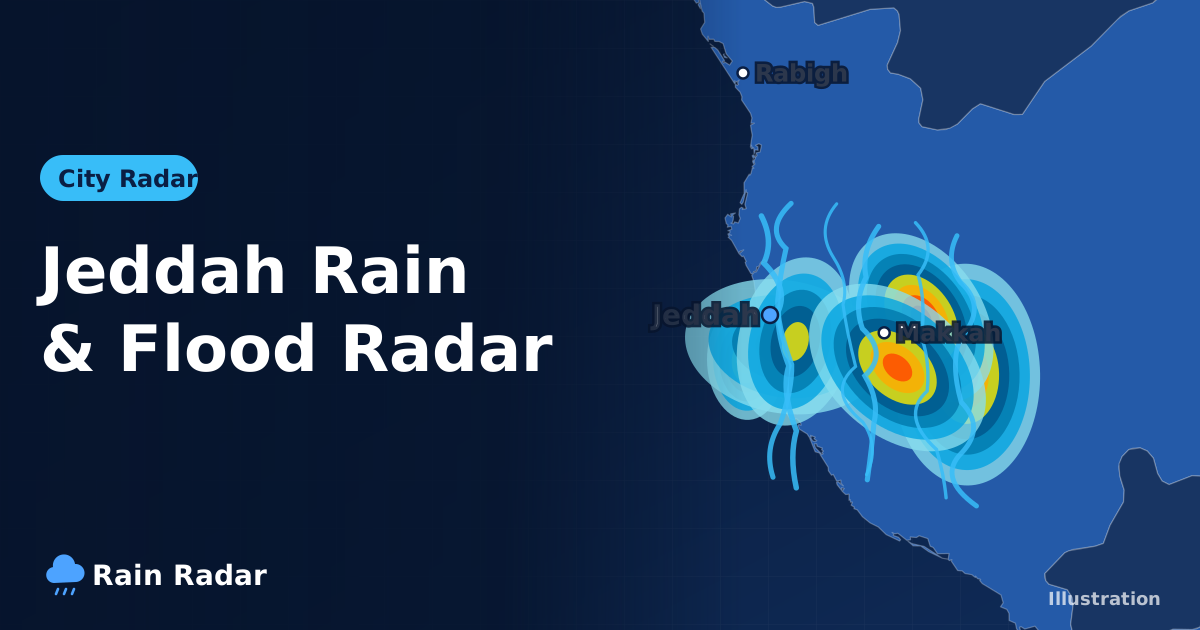
In Jeddah, follow Jeddah weather now and our Jeddah rain radar guide; in Makkah, check Makkah weather during rain events.
Summer visitors to the southern mountains should know that thunderstorms in Asir usually build in the afternoon and can intensify fast, sending water down the wadis towards the Tihamah lowlands. Check Abha weather before heading to parks and mountain roads, and plan outdoor activities for the morning, when conditions are usually calmer.
Flash flood safety rules
Most flood accidents can be avoided by following a few simple rules. Keep this list and share it with your family:
- Never cross a flowing wadi, by car or on foot, however shallow it looks. Depth and current are hard to judge, and the road underneath may have collapsed.
- Never camp in a wadi bed or channel. Choose higher ground away from watercourses, even in clear weather.
- Avoid tunnels and low underpasses during heavy rain; they are the first places to flood in cities.
- Stay away from power poles and cables, and from water pooling near them.
- Do not go near a flood to watch or film it; wadi banks can collapse without warning.
- Keep an eye on children and keep them away from floodwater.
- If you are trapped by water, move to higher ground and call Civil Defense on 998.
Crossing a flowing wadi does not only risk your life. The authorities treat it as a violation subject to penalties, because rescuing stranded people also puts Civil Defense teams in danger.
Early warnings and Civil Defense: your official sources
When a strong rain event is expected, the National Center for Meteorology issues alerts by region, which you can follow on the NCM website. Civil Defense also sends early-warning messages to phones in affected areas, urging people to stay in safe places and keep away from valleys.
These are the official references; this site does not issue warnings. To understand alert levels, read our guide to NCM weather alerts and early warnings.
Check conditions before you travel
Before any road trip in the rainy season, check the weather along your route, not just in your city. Riyadh can be dry while heavy rain falls on the road to Taif or Abha. If an official alert is issued, postpone the trip if you can.
If you must travel, tell a relative your route and expected arrival time, keep your phone charged and carry enough water. If you reach a road cut by water, do not look for a way across the wadi: turn back, or wait on safe, high ground until the water goes down.
How can the rain radar help you avoid floods?
Radar cannot predict a flood itself, but it shows where rain is falling now and how heavy it is, which is the first sign that wadis may flow. The live rain radar on the home page plays the last 2 hours in roughly 10-minute frames (RainViewer data), so you can watch storms move. The 7-day forecast maps (NOAA GFS) show where rain is expected next.
Reading the radar colours
- Light cyan: light rain.
- Blue: moderate rain.
- Yellow and orange: heavy rain.
- Red and pink: very heavy rain, often with thunderstorms.
If yellow or red sits over mountains for a while, or moves towards the upper part of a valley you are in, be cautious and move away from the wadi, even if the rain has not reached you. Learn more in our guide to reading the Saudi rain radar.
Radar limits
Mountains can block part of the signal in some areas, and false echoes sometimes appear near the ground. The image also shows past and present rain, not future rain. Combine it with the hourly forecast on your city page from all Saudi cities and with official alerts.
What to do after a flood
The danger does not end when the rain stops. Wadis can keep flowing for hours after the last drop, especially if the rain fell on distant high ground. So:
- Wait until the water has stopped flowing completely before crossing any wadi or flooded road.
- Watch out for damaged roads and potholes hidden by water and mud.
- Keep away from buildings or walls damaged by water.
- Keep following Civil Defense messages until the event is declared over.
Floods are part of the nature of the Kingdom. Being aware of them is what keeps the rainy season a time to celebrate, not a time for accidents.
Frequently asked questions
Why do flash floods happen in Saudi Arabia when it rarely rains?
Rocky, dry ground cannot absorb heavy rain quickly, so water runs off the surface and collects in valleys (wadis) and channels, where it flows with great force. The flood can come from rain that fell far away, high up the valley.
Is it safe to drive through a wadi if the water looks shallow?
No. Never cross a flowing wadi, by car or on foot, however shallow it looks. The depth and the force of the current are hard to judge, and the road underneath may be washed away. Wait until the water stops or take another route.
How do I know if there are floods in my area today?
Follow alerts from the National Center for Meteorology and Civil Defense early-warning messages on your phone, and watch a live rain radar to see where heavy rain is falling and which way it is moving.
What is the Civil Defense number in Saudi Arabia?
The Civil Defense emergency number is 998. Call it if you are trapped by water or see people in danger from floods.
Does this website issue flood warnings?
No. Rain Radar Saudi Arabia shows observed rain on radar and weather forecasts only. Official warnings come from the National Center for Meteorology and Civil Defense.
Sources: the National Center for Meteorology (NCM) for official alerts; RainViewer radar and Open-Meteo forecasts for the data shown on this site.