Makkah is hot for most of the year. For Umrah, the most comfortable months are usually December to February, when days are warm rather than scorching; from May to September temperatures often pass 40 °C. In hot months, plan tawaf and sa'i for the night or the hours after Fajr, drink water constantly, and check Makkah weather today before heading out. Rain is rare, but in autumn and winter it can come as short, heavy downpours.
This guide is written for pilgrims and visitors who want to know what to expect from the weather in Makkah, how to choose the right season and time of day, and how to stay safe in the heat and during the occasional storm.
What is the weather like in Makkah?
Makkah sits in a valley surrounded by bare, rocky mountains, not far inland from the Red Sea coast. The rock absorbs heat during the day and releases it at night, so nights in Makkah stay warm and rarely cool down the way they do in the open desert.
Makkah is usually less humid than Jeddah, but humid days do happen when the wind blows in from the sea. Rainfall is low and irregular. When it does rain, a lot of water can fall in a short time, and the surrounding valleys channel it towards low-lying streets.
In short: expect heat, strong sunshine and dry air most of the year, with a genuinely pleasant window in winter.
- Check Makkah weather firstLook at the temperature, UV index and hourly forecast on the Makkah page.
- Pick the cooler hoursAfter Fajr and in the evening it is usually cooler, especially in summer.
- Keep drinking waterHeat and long walks raise the risk of heat exhaustion.
- Protect yourself from the sunAn umbrella, light clothing and sunscreen when the UV index is high.
- Watch for sudden rainFollow the rain radar and NCM alerts during the rainy season.
Makkah weather for Umrah by season
The table below gives an approximate picture to help you plan. Real conditions vary from year to year and day to day.
| Season | Approximate months | Daytime temperature (approx.) | Notes for pilgrims |
|---|---|---|---|
| Winter | December – February | Usually warm, high 20s to low 30s °C | Most comfortable for Umrah; occasional showers |
| Spring | March – April | Rising into the 30s °C | Fine in the early morning and evening |
| Summer | May – September | Very hot, often above 40 °C | Perform rituals at night or after Fajr; drink water constantly |
| Autumn | October – November | Hot to warm, slowly easing | Higher chance of short thunderstorms |
All values are approximate. For the actual temperature, hourly forecast and UV index, open the Makkah weather page.
Umrah in winter
Winter is the best time for Umrah from a weather point of view. Days are generally warm and comfortable and evenings are mild. Rain systems with thunder can pass through, so keep an eye on the forecast while you are there.
Umrah in summer
Summer heat in Makkah is intense and UV levels are at their highest. Many people still perform Umrah safely in summer by choosing the right hours and following basic heat precautions. For more on the hot months across the country, read our guide to summer in Saudi Arabia.
Umrah in spring and autumn
These are transition seasons: early mornings and evenings are manageable, but many afternoons are still hot. Autumn brings a somewhat higher chance of short thunderstorms than the rest of the year, especially when clouds build over the surrounding mountains.
Ramadan Umrah and the weather
Ramadan follows the Hijri calendar, so it moves about 11 days earlier each year in the Gregorian calendar. Over the next few years it falls in winter, which usually means milder fasting days in Makkah, but over a longer cycle it moves into the hot months. When Ramadan falls in summer, drink plenty of water between iftar and suhoor and save physical effort for after iftar where you can.
What is the best time of day for tawaf and sa'i?
When you perform your rituals matters as much as the season, especially in the warm months. In general:
- After Fajr until early morning: one of the best times, with the lowest daytime temperatures before the sun gets strong.
- After Isha and through the night: a favourite for many pilgrims in summer. There is no sun, although the air stays warm.
- Late afternoon towards Maghrib: temperatures begin to fall, but in summer it can still be very hot.
- Midday: the hottest and sunniest part of the day; avoid open courtyards at this time in the warm months.
The Makkah forecast page shows sunrise and sunset times, the UV index and an hourly forecast, so you can see when the heat is expected to ease each day.
How to stay safe in Makkah's heat
Heat, physical effort and crowds come together on an Umrah trip, so prevention matters. The key tips:
- Drink water regularly before you feel thirsty. Zamzam water is available throughout the Grand Mosque.
- Use an umbrella in open areas to cut direct sun exposure.
- Wear light, loose, light-coloured clothing, and use sunscreen on exposed skin; if you are in ihram, choose an unscented product.
- Rest in shaded or air-conditioned areas, and do not push yourself, particularly if you are elderly or have a health condition.
- Know the signs of heat exhaustion such as dizziness, headache, nausea or heavy sweating, and ask the medical teams on site for help straight away.
- Look after your feet: floors outside cooled areas can get hot, and long walks are tiring.
Travelling with older relatives or children? Plan shorter sessions with breaks, and agree on a meeting point in case you get separated in the crowds.
Rain in Makkah: what should pilgrims do?
Rain is uncommon in Makkah, but in autumn and winter it can arrive as heavy thunderstorms. Because of the mountains and valleys around the city, water can run quickly through low streets and underpasses.
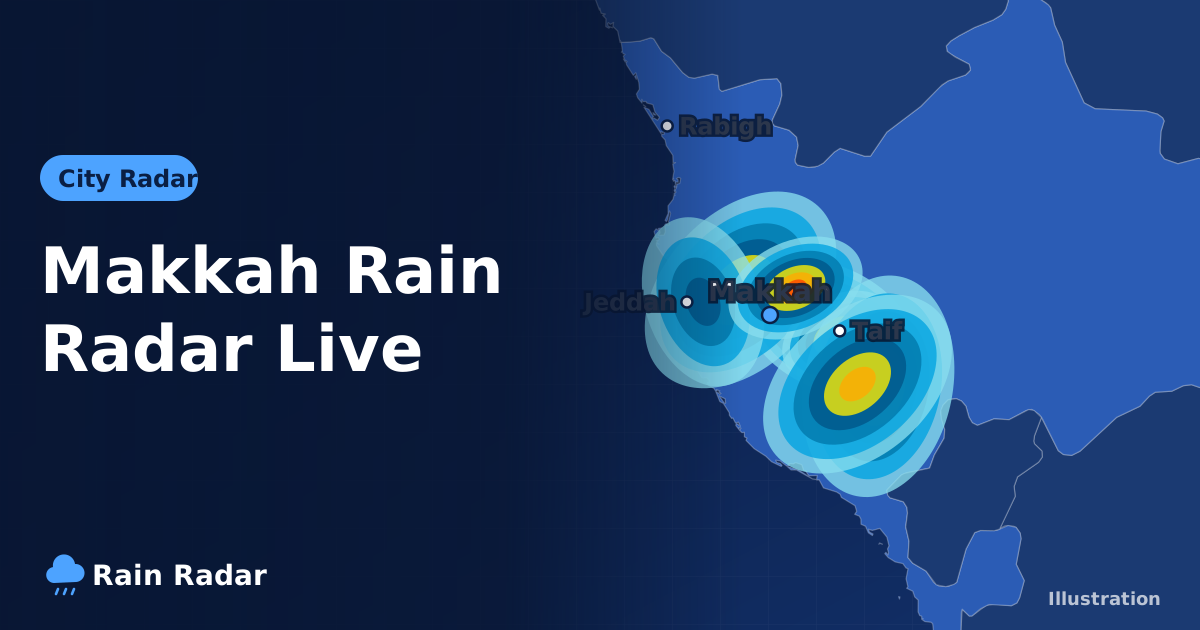
To follow rain as it happens, open the live rain radar. It shows observed rainfall for the last 2 hours in roughly 10-minute frames (RainViewer data); press play to see which way the rain is moving. Light cyan means light rain, blue moderate, yellow and orange heavy, and red or pink very heavy. Our Makkah rain radar guide explains this in more detail.
During a storm, keep away from flood channels and low tunnels, do not cross streets with running water, and follow the instructions of the authorities inside and outside the Haram.
Rain Radar Saudi Arabia does not issue official warnings. Official alerts come from the National Center for Meteorology (NCM) and Civil Defense; see our guide to NCM weather alerts.
How to check Makkah weather during your stay
Many people search for a "Makkah weather 30 days" forecast, but reliable day-by-day forecasts only reach a few days ahead. The best approach is to use the seasonal picture above for planning, then switch to the 7-day forecast as your travel date gets close.
During your stay, the Makkah page gives you the current temperature, an hourly forecast, the UV index, sunrise and sunset, and air quality, based on Open-Meteo forecast data. If your trip passes through Jeddah, check Jeddah weather too, and if you are continuing to Madinah, open Madinah weather or browse all Saudi cities.
With good preparation and the right timing, the weather becomes something you plan around rather than an obstacle. May your Umrah be accepted.
Frequently asked questions
What is the best month for Umrah in terms of weather?
December, January and February are usually the most comfortable months for Umrah in Makkah, with warm days that are often in the high 20s to low 30s °C and pleasant evenings. Short showers are possible in this period, so check the forecast during your stay.
How hot does Makkah get in summer?
From roughly May to September, daytime temperatures in Makkah often go above 40 °C, and the UV index is very high. Many pilgrims perform Umrah at night or after Fajr in these months to avoid the strongest heat.
What time of day is best for tawaf in hot weather?
After Fajr until early morning, and after Isha into the night, are generally the most comfortable times. Midday is the hottest part of the day and is best avoided in open courtyards during the warm months.
Does it rain in Makkah?
Rain in Makkah is infrequent, but when it comes, mostly in late autumn and winter, it can arrive as short, heavy thunderstorms. Water can run quickly through low streets, so follow the instructions of the authorities and avoid flowing water.
Can I get a 30-day weather forecast for Makkah?
Reliable day-by-day forecasts only reach a few days ahead. Use the seasonal guide to plan your trip, then check the 7-day forecast for Makkah as your travel date approaches.
Sources: the National Center for Meteorology (NCM) for official alerts; RainViewer radar and Open-Meteo forecasts for the data shown on this site.