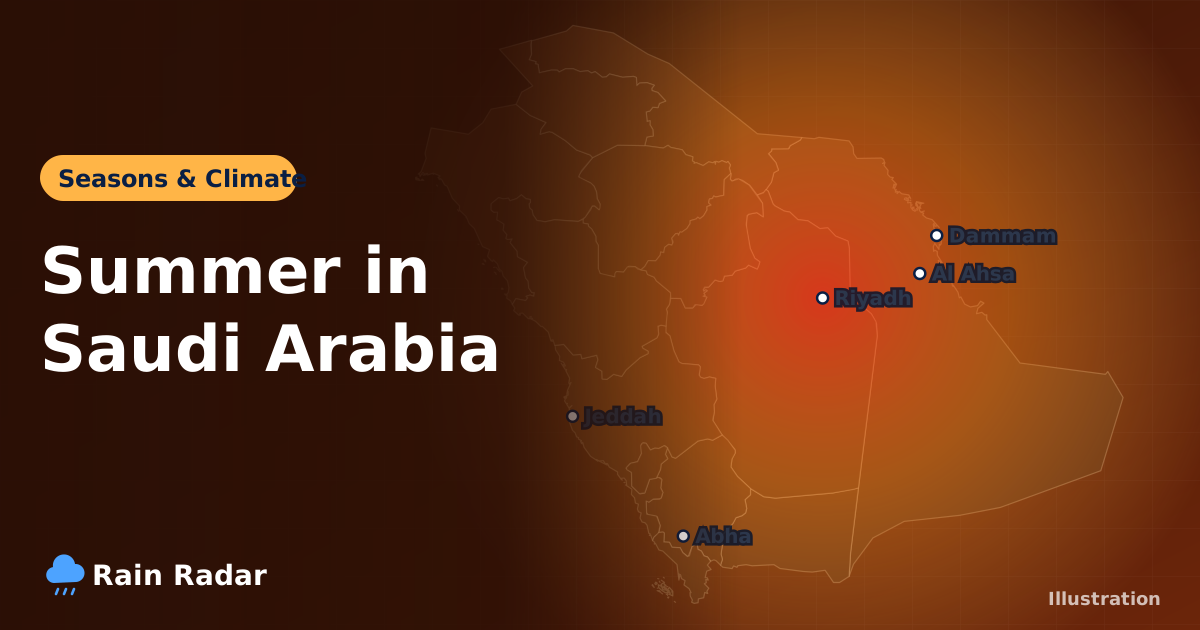
Summer in Saudi Arabia officially starts around 21 June, but the real heat begins in May and lasts until September, roughly five months in most regions. Expect extreme dry heat inland (Riyadh can pass 45 °C on some days), heavy humidity on the Red Sea and Gulf coasts, and milder weather with summer rain in the southwestern highlands around Abha, Al-Baha and Taif.
Whether you have just moved to the Kingdom or are visiting in the hot months, knowing how summer differs between regions helps you plan your days and stay safe.
When does summer start and end in Saudi Arabia?
There is a difference between astronomical summer and the summer people live through. Astronomical summer runs from the solstice around 21 June to the autumn equinox in late September.
On the ground, summer arrives in May, when temperatures climb sharply in Riyadh, Qassim, the Eastern Province and Makkah. The heat usually peaks in July and August and begins to break slowly in September.
Inland, summer typically ends in October, when nights cool down and the autumn rain season, Al-Wasm, begins. On the coasts, warmth and humidity can last longer.
- Avoid the midday sunThe heat usually peaks between 11 am and 4 pm.
- Drink before you are thirstyEspecially when working or walking outdoors.
- Watch the UV indexYou will find it on the UV card on your city page.
- Mind the coastal humidityIn Jeddah and Dammam humidity makes it feel hotter.
- Never leave anyone in the carA closed car heats up very quickly.
How long does the heat last? Summer month by month
The practical answer is about five months, May to September, with clear differences between regions. This table gives an approximate picture:
| Month | Inland (e.g. Riyadh) | Coasts (e.g. Jeddah, Dammam) | Southern highlands (e.g. Abha) |
|---|---|---|---|
| May | Hot and getting hotter | Hot, humidity rising | Mild to warm |
| June | Very hot and dry | Hot and humid | Mild, chance of rain |
| July | Peak heat | Very hot, very humid | Mild, rain and some fog |
| August | Peak heat | Very hot, very humid | Mild, summer rain |
| September | Hot, starting to ease | Hot and humid | Mild, cool nights |
This is a qualitative, approximate picture; real days vary from year to year. For exact numbers, open your city's page.
How hot is Riyadh, Jeddah and Dammam in summer?
Riyadh and the interior: dry heat
Riyadh can pass 45 °C on some summer days, but the air is usually dry. The heat can feel like it stings the skin, while nights are somewhat cooler. Qassim, Al-Kharj and Wadi Ad-Dawasir behave similarly. Follow Riyadh temperature live with the hourly forecast.
Jeddah and the Red Sea coast: heat and humidity
In Jeddah and Yanbu, temperatures may not reach inland levels, but high humidity makes the heat feel much stronger, because sweat cannot evaporate to cool the body. Humid nights in July and August are especially uncomfortable. Check Jeddah temperature and humidity before outdoor plans.
Dammam and the Eastern Province: inland heat and Gulf humidity
The Eastern Province combines both. Al-Ahsa and Hafar Al-Batin can be extremely hot and dry, while coastal Dammam, Qatif and Jubail suffer high humidity, especially late in summer. Early summer brings strong northwesterly winds known in the Gulf as Al-Bawarih; they can raise dust and temporarily ease the humidity.
The north: hot days, gentler nights
In Tabuk, Al-Jouf and the Northern Borders, summer days are hot, but nights are usually gentler than in Riyadh or Jeddah, so evenings outdoors are popular.
Summer rain in southwest Saudi Arabia
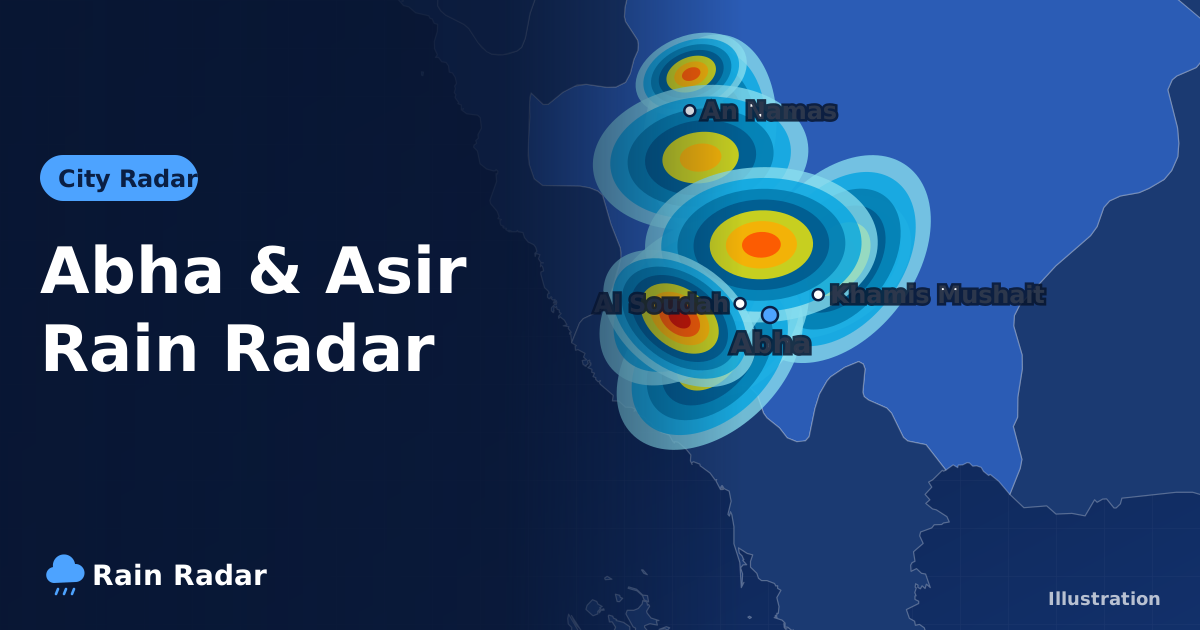
Summer is not dry everywhere. The southwestern highlands, including Abha, Khamis Mushait, An-Namas, Al-Baha and parts of Jazan, receive moist air in summer that helps afternoon thunderstorms form.
These areas get summer rain and some foggy days, with mild temperatures that make them favourite summer escapes. Read more in our Abha and Asir rain radar guide, and check Abha weather before you travel.
Scattered thunderstorms also build over the Hijaz mountains around Taif, Al-Hada and Ash-Shafa. The live rain radar is especially useful here, showing storm cells forming and moving over the last 2 hours so you can see whether they are heading your way.
Heatwaves and dust in summer
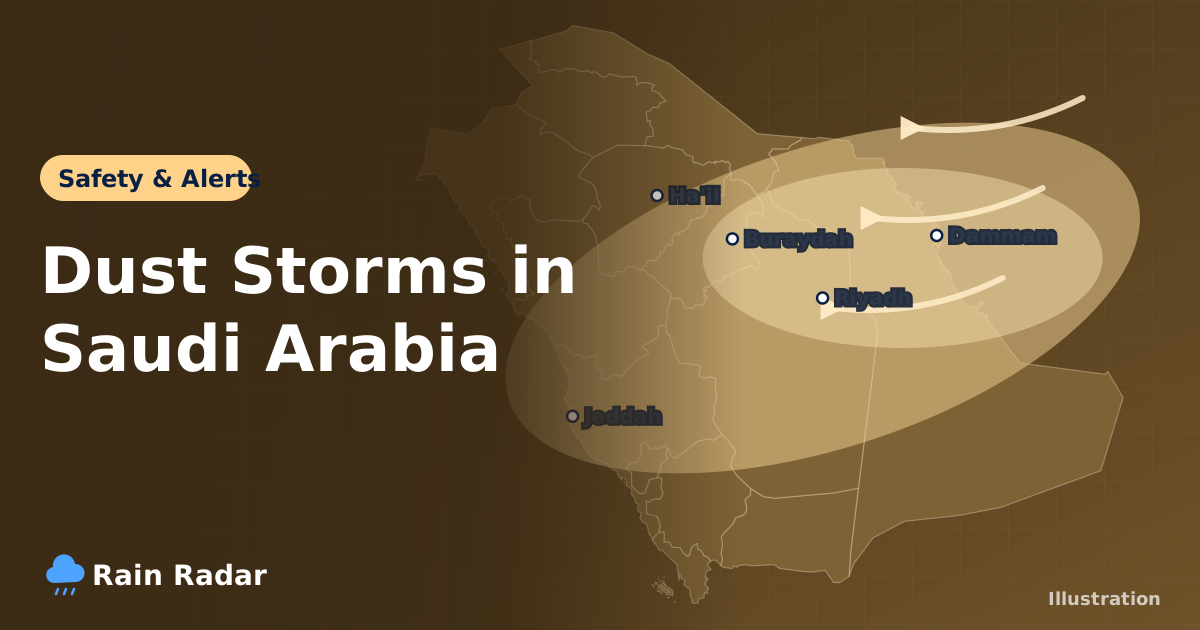
Heatwaves push temperatures above their usual levels for several days. Inland, summer, especially early summer, also brings winds that raise dust, cutting visibility and affecting people with allergies and asthma.
Heatwaves put extra strain on older people, children, people with heart or chronic conditions, and anyone working outdoors. Spotting one early in the 7-day forecast gives you time to adjust your plans. It also helps to service your air conditioning before summer and keep it at a moderate setting.
Each city page includes an air quality and dust card. For more, read our guide to dust storms in Saudi Arabia.
How to stay safe in the Saudi summer heat
Extreme heat is not just uncomfortable; it can cause heat exhaustion and heat stroke. The essentials:
- Drink water regularly even if you do not feel thirsty, and cut down on caffeine and sugary drinks.
- Avoid the midday sun. Late morning to mid-afternoon is the hottest, most intense period; plan errands for early morning or after sunset.
- Watch the UV index on your city page; it is very high on most summer days. Use sunscreen, sunglasses and a hat.
- Wear light, loose, light-coloured clothing.
- Never leave anyone in a parked car, especially children, even for a few minutes; the temperature inside rises very fast.
- Know the warning signs: dizziness, headache, nausea or heavy sweating. Move somewhere cool at once and get medical help if needed.
Saudi regulations ban outdoor work in direct sun during the midday hours of the peak summer months, a reminder of how dangerous that time of day is for everyone.
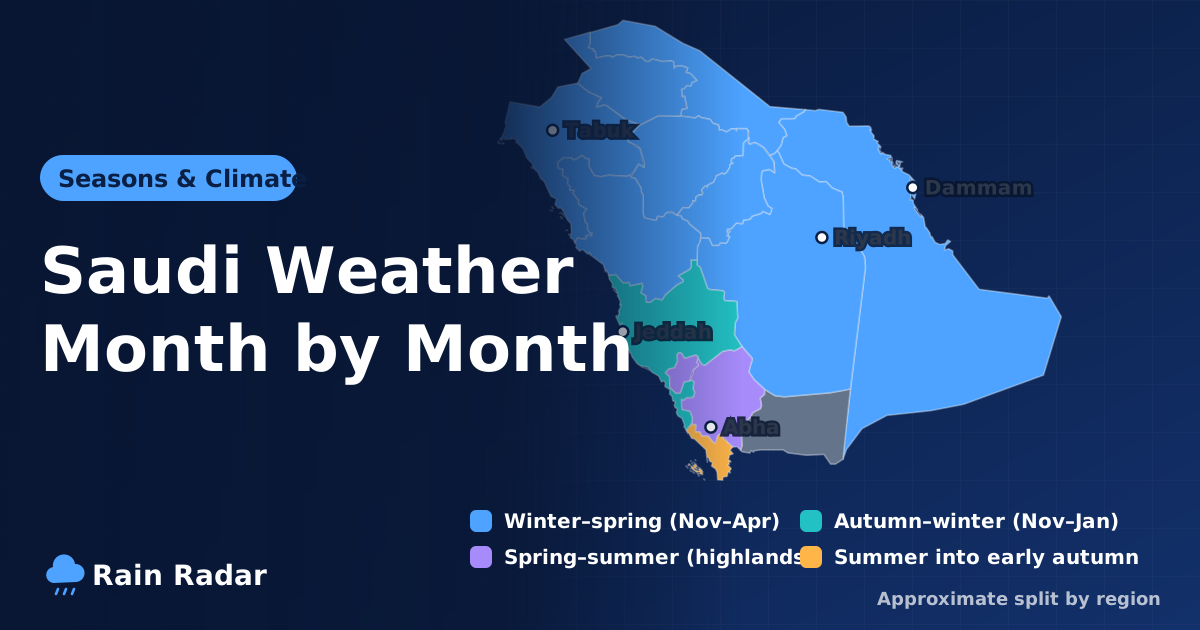
From all Saudi cities, pick your city to see the current and feels-like temperature, the hourly forecast (to find the coolest hours), a 7-day outlook to spot heatwaves, UV index, sunrise and sunset, and air quality. For the whole year, see Saudi Arabia weather by month. Official heat and dust warnings come from the National Center for Meteorology.
Frequently asked questions
How long is summer in Saudi Arabia?
In practice, about five months, from May to September in most regions. Astronomical summer starts around 21 June, but the heat builds from May and usually breaks during October inland.
How hot does Riyadh get in summer?
Riyadh can pass 45 °C on some summer days, usually in July and August. The air is mostly dry, and nights are somewhat cooler than the days.
Why does Jeddah feel hotter than the temperature shows?
Because humidity on the Red Sea coast is high. Sweat does not evaporate easily in humid air, so the body struggles to cool itself and the heat feels stronger than the number on the thermometer.
Where is it cooler in Saudi Arabia in summer?
The southwestern highlands, including Abha, Khamis Mushait, An-Namas, Al-Baha and the Taif area, are much milder in summer and get afternoon thunderstorms, which makes them popular summer destinations.
What are the biggest dangers of the Saudi summer?
Heat exhaustion, heat stroke and dehydration, especially when walking or working in the midday sun. Dust inland and high humidity on the coasts add to the strain.
Sources: the National Center for Meteorology (NCM) for official alerts; RainViewer radar and Open-Meteo forecasts for the data shown on this site.