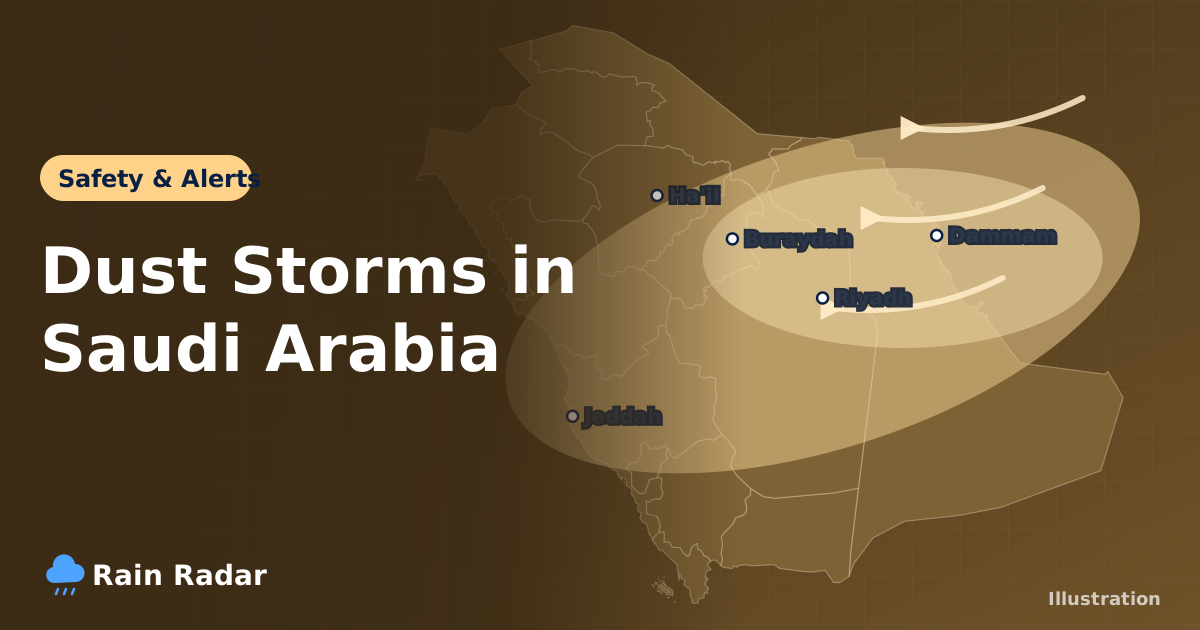
Dust storms are a regular part of life in Saudi Arabia. They usually peak in spring and early summer, when strong winds over the vast deserts lift sand and dust, cut visibility and worsen air quality. Dust tends to ease in late summer and autumn, but it can happen at any time of year. To stay safe, check the dust and air quality card on your city page and follow alerts from the National Center for Meteorology (NCM).
Anyone who has lived through a spring in Riyadh knows the sight: the sky turns orange, a wall of dust rolls in, and visibility drops within minutes. Here is why it happens, when to expect it and how to protect yourself.
Why are dust storms so common in Saudi Arabia?
Deserts and dry land cover most of the Kingdom, including great sand seas such as the Rub' al Khali (Empty Quarter), the Nafud and the Dahna. When strong winds blow across dry ground with little plant cover, sand and dust particles are lifted into the air easily.
Dust is most likely when a weather system brings a sudden change in wind: cold fronts in winter and spring, or the strong northwesterly winds of early summer, known in the Gulf as Al-Bawarih, which affect the centre and east. Thunderstorms can also push a wall of dust ahead of them before any rain arrives, a type of storm often called a haboob.
The effects go beyond a hazy sky. Dust affects health, road safety and sometimes flights, school activities and outdoor events, so it pays to know when it is likely and how to prepare.
- Check the dust cardYour city page shows the air quality index and dust levels.
- Close the windowsAnd set the air conditioning to recirculate.
- Masks for asthma and allergiesAnd avoid outdoor activity at the peak.
- Drive carefullySlow down, keep your distance and use low beams.
- Follow the alertsNCM issues warnings when visibility drops.
When is dust season in Saudi Arabia?
There is no official dust season, but the general pattern is roughly this:
- Winter: occasional dust events with cold fronts and strong winds, usually short-lived.
- Spring (roughly March to May): one of the most active periods for dust and sandstorms in the centre, north and east, because the weather is changeable and low-pressure systems are frequent.
- Early summer (roughly June and July): northwesterly winds strengthen over the Eastern Province and the centre, bringing repeated dust and lower visibility.
- Late summer and autumn: dust generally eases. This is what people usually mean when they ask when dust season ends.
These are general patterns. Some springs have clear weeks, and a strong dust event can still arrive in autumn.
Sandstorm or dust storm: what is the difference?
People often use the two terms interchangeably, but the distinction is useful.
Sandstorm
A sandstorm carries larger, heavier sand grains that mostly stay close to the ground. It comes with strong winds and can cut visibility sharply on desert highways, but it usually calms once the wind drops.
Dust storm
A dust storm carries very fine particles that rise high into the air. They can stay suspended for hours or even days and travel far from their source, so a city can look hazy and yellow even when the wind there is light. These fine particles are the bigger health concern because they reach deep into the lungs.
Whether you search for "sandstorm in Saudi Arabia today" or "dust storm Riyadh", what matters most is how far you can see and how much dust is in the air.
Dust in Riyadh, Jeddah and the Eastern Province
Riyadh
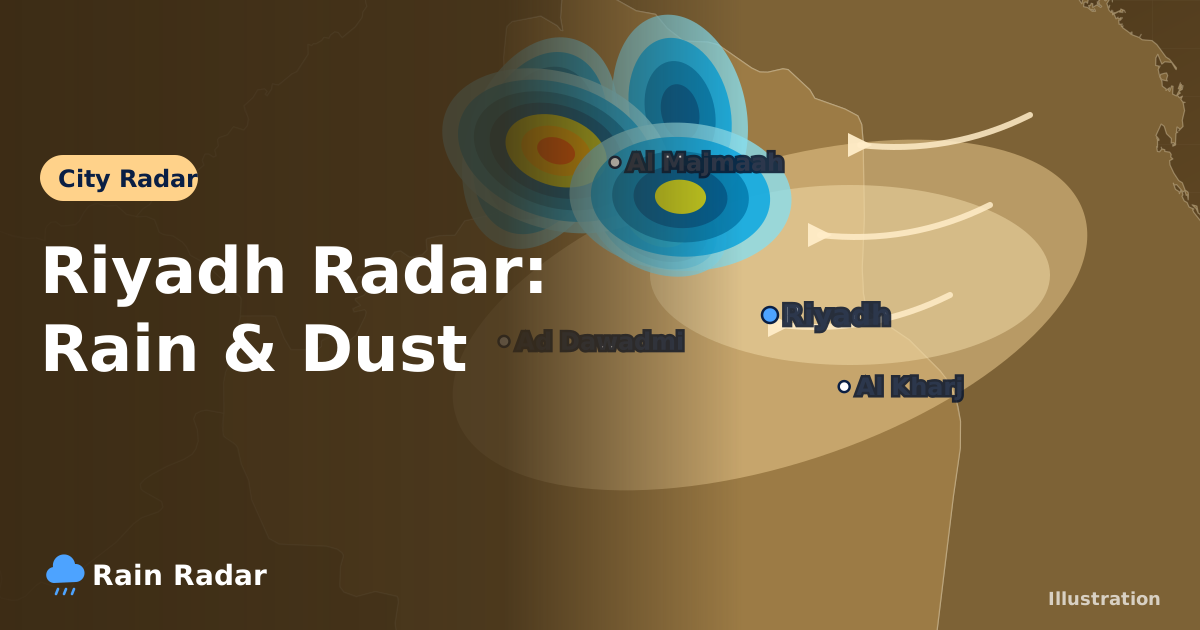
Riyadh and central Saudi Arabia are among the areas most affected by dust, especially in spring and early summer. The sky can turn orange in a short time as a dust front arrives. Follow Riyadh weather and read our Riyadh rain radar guide for more on the capital's rain and dust.
Jeddah
Jeddah and the west coast are not immune. Easterly and northerly winds carry dust from the interior to the coast, and combined with high humidity the air can feel stifling. Check Jeddah weather and air quality.
Dammam and the Eastern Province
Dammam, Al-Ahsa and Jubail are exposed to the northwesterly winds of early summer, so dust events are frequent and sometimes come together with heat and high humidity.
How to protect your health during a dust storm
Dust affects everyone, but it is more dangerous for people with asthma, allergies, or heart and lung disease, and for children, older people and pregnant women.
- Stay indoors as much as possible when dust is heavy, and close windows and doors.
- Postpone outdoor exercise until air quality improves.
- Wear a suitable mask if you must go out; a well-fitted high-filtration mask works better than a cloth one.
- Keep your medicines with you if you have asthma or allergies, and follow the plan your doctor gave you.
- Drink water regularly and rinse your face and eyes when you come back inside.
- Seek medical help or go to the emergency department if you have severe shortness of breath or chest pain.
This is general awareness advice and does not replace advice from your doctor if you have a chronic condition.
Driving in a sandstorm and low visibility
Visibility on intercity highways can fall to a very short distance within minutes. To stay safe:
- Slow down gradually and increase the gap to the car in front.
- Use low-beam headlights; high beams reflect off the dust and make visibility worse.
- Do not overtake when you cannot see clearly.
- If visibility becomes almost zero, pull completely off the road to a safe spot and wait for the dust to settle.
- Close the windows and set the air conditioning to recirculate.
Before a road trip in spring or early summer, check the wind and dust forecast along your whole route, not just at your departure city.
How to track dust in Saudi Arabia on this site
Rain radar is designed to detect rain and is not a reliable way to follow dust. That is why each city page includes an air quality and dust card, showing forecast dust and particle levels from weather models, alongside the current weather, hourly forecast and 7-day outlook.
- Good: outdoor activities are fine for most people.
- Moderate: people with asthma or allergies should reduce effort outdoors.
- Unhealthy or worse: everyone is better off indoors, postponing exercise and trips.
These values come from computer models, so reality can differ, especially with sudden local storms. Look at the sky too, and trust your eyes if visibility drops fast. Pick your city from all Saudi cities before planning outdoor activities. If thunderstorms are driving the dust, the live rain radar shows the last 2 hours of observed rain and where the storm is heading. In hot months, heat and dust often come together, so see our summer in Saudi Arabia guide too.
Official alerts about dust and low visibility come from the National Center for Meteorology; this site does not issue warnings. Learn how to read them in our guide to NCM weather alerts.
Frequently asked questions
When is dust storm season in Saudi Arabia?
Dust is most common in spring and early summer, roughly March to July, especially in the centre, north and east. It usually eases in late summer and autumn, but a dust event can happen in any month.
What is the difference between a sandstorm and a dust storm?
A sandstorm carries heavier sand grains that stay close to the ground and settle once the wind drops. A dust storm carries very fine particles that rise high, can hang in the air for hours or days and travel long distances. Fine dust is the bigger health concern.
Can rain radar show dust storms?
Not reliably. Rain radar is designed to detect rain. For dust, use the air quality and dust card on your city page, which is based on forecast models, and follow official NCM alerts about dust and low visibility.
What should I do if I am driving in a dust storm?
Slow down gradually, increase your following distance, use low-beam headlights and do not overtake. If visibility becomes almost zero, pull completely off the road to a safe place and wait for the dust to settle.
Who is most at risk from dust?
People with asthma, allergies, heart or lung disease, as well as children, older people and pregnant women. They should stay indoors during heavy dust and keep their medicines to hand.
Sources: the National Center for Meteorology (NCM) for official alerts; RainViewer radar and Open-Meteo forecasts for the data shown on this site.