Al-Wasm (الوسم) is a traditional season in the Arabian Peninsula's folk calendar that marks the start of autumn rain. It begins around mid-October (often given as about 16 October) and lasts roughly 52 days, until early December. Its rain is called Wasmi because it "marks" the land with new growth. The dates are inherited and approximate; to see where it is actually raining, use the live rain radar and official forecasts.
If you live in Riyadh, Qassim or Hail, you will hear people talk about Al-Wasm every October. Here is what the word means, why it matters, and how to enjoy the season safely.
What is Al-Wasm, and what does Wasmi rain mean?
The name comes from the Arabic wasm, meaning a mark or brand. The season is called this because its rain leaves a mark on the land: grasses sprout and the low desert basins (rawdah and fayd) turn green the following spring. Rain that falls in this season is described as wasmi.
For Bedouin and settled communities alike, Al-Wasm was eagerly awaited, because early autumn rain meant a good spring and plentiful grazing for livestock. Today people still announce its arrival on social media and in family gatherings, and link it with the start of kashta season, the Saudi word for a desert outing or camping trip.
Its importance varies by region. It is central to the culture of Najd (central Arabia), Qassim, Hail and the north and east, where autumn rain feeds the pastures. On the west coast and in the southwestern highlands, rain follows other seasons, so Al-Wasm is talked about less, even though autumn brings cooler air almost everywhere.
Remember that Al-Wasm is a folk calendar built on the rising of stars and generations of weather watching. It describes what people have come to expect, not a scientific forecast for any particular year.
When does Al-Wasm start, and how long does it last?
The commonly quoted answer is that Al-Wasm begins around mid-October, often on about 16 October, and lasts around 52 days, ending in early December. After it comes Al-Murabba'aniyah, the first cold period of winter.
Before Al-Wasm comes a period known as As-Safari, associated with the rising of the star Suhail (Canopus) and the first easing of the summer heat. Al-Wasm then opens the door to autumn rain in the centre, north and east, which is why many see it as the real start of the outdoor season.
The four stars of Al-Wasm (approximate)
| Star period | Approximate length | Position in the season |
|---|---|---|
| Al-Awwa (العوّاء) | About 13 days | Start of Al-Wasm, around mid-October |
| As-Simak (السماك) | About 13 days | Late October to early November |
| Al-Ghafr (الغفر) | About 13 days | Around mid-November |
| Az-Zubana (الزبانا) | About 13 days | Late November to early December |
These dates and lengths are traditional and approximate; different folk calendars may vary by a day or two.
How many days of Al-Wasm are left?
Count the days from today to early December. From mid-November, for example, roughly two to three weeks remain by the usual reckoning. The weather does not respect these boundaries, though: rain can arrive before Al-Wasm or after it ends.
Where does Wasmi rain fall, and what is it like?
Al-Wasm is most closely tied to central, northern and eastern Saudi Arabia, where rain chances improve as autumn weather systems become more active. Wasmi rain usually comes as distinct rain events lasting a day or a few days, with calm, clear spells in between.
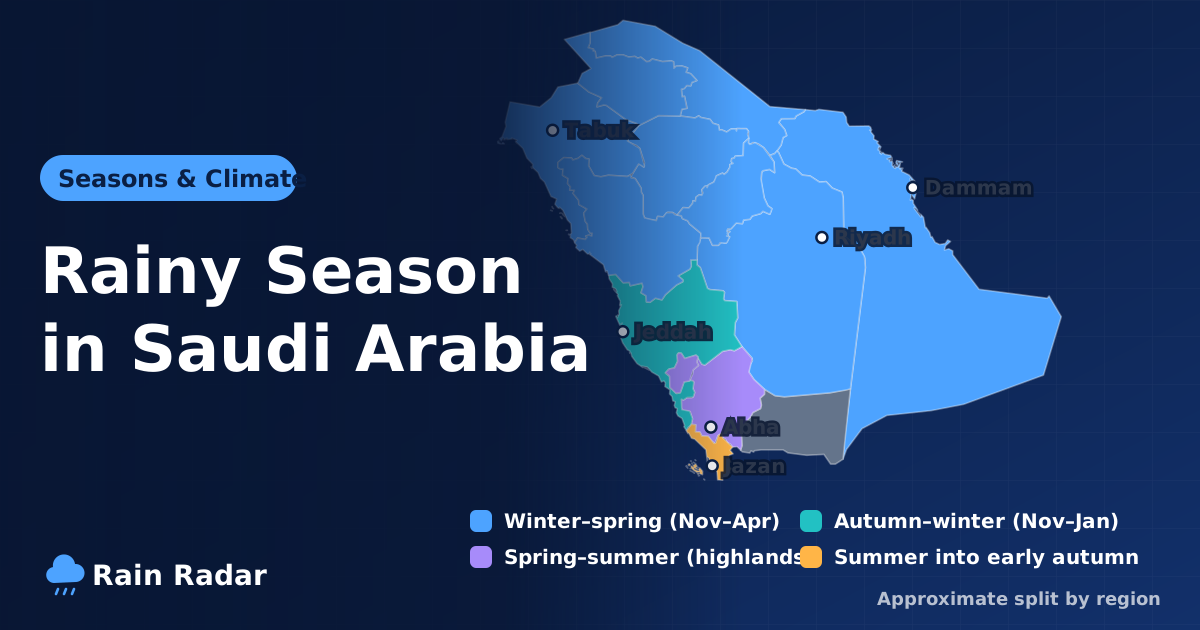
Other regions have their own timing. Jeddah and Makkah get more rain in late autumn and winter, while the southwestern highlands are wetter in spring and summer. For a region-by-region breakdown, read when is the rainy season in Saudi Arabia.
Desert lovers also connect Wasmi rain with the desert truffle, known locally as faqa' (فقع). Folk wisdom says good early Wasm rain sets up a good truffle season the next spring, though in reality many factors are involved.
How to follow Wasmi rain as it happens
- Open the rain radar on the home page to see observed rain over the last 2 hours in roughly 10-minute frames, and press play to watch the clouds move.
- Check your city page, such as Buraydah weather or Riyadh weather, for the hourly rain chance and 7-day forecast.
- Follow official alerts from the National Center for Meteorology when a rain event is expected.
What is the weather like during Al-Wasm?
Al-Wasm is not only about rain. It is also when temperatures clearly turn. Early in the season, days in central Saudi Arabia are still warm but nights are far gentler than in summer. By November the nights grow cool and winter starts to feel close. Typical features:
- The heat breaks: daytime highs inland drop compared with summer, and being outdoors during the day becomes comfortable again.
- Fresh nights: the gap between day and night widens, especially in the desert and on high ground, so bring an extra layer for the evening.
- Cumulus clouds and thunderstorms on some days, sometimes short but heavy, occasionally with lightning and downbursts that kick up dust.
- Morning fog in some low-lying and coastal areas after rain.
Because conditions can change within hours, check the hourly forecast before a long drive, along with the UV index and air quality if you will be outdoors for a while.
Al-Wasm trips and desert camping: safety tips
Mild weather makes Al-Wasm the start of the camping season. It is a wonderful time to be outdoors, but desert rain can quickly turn dry valleys (wadis) into torrents.
- Check the forecast for the area you are heading to, not just your home city.
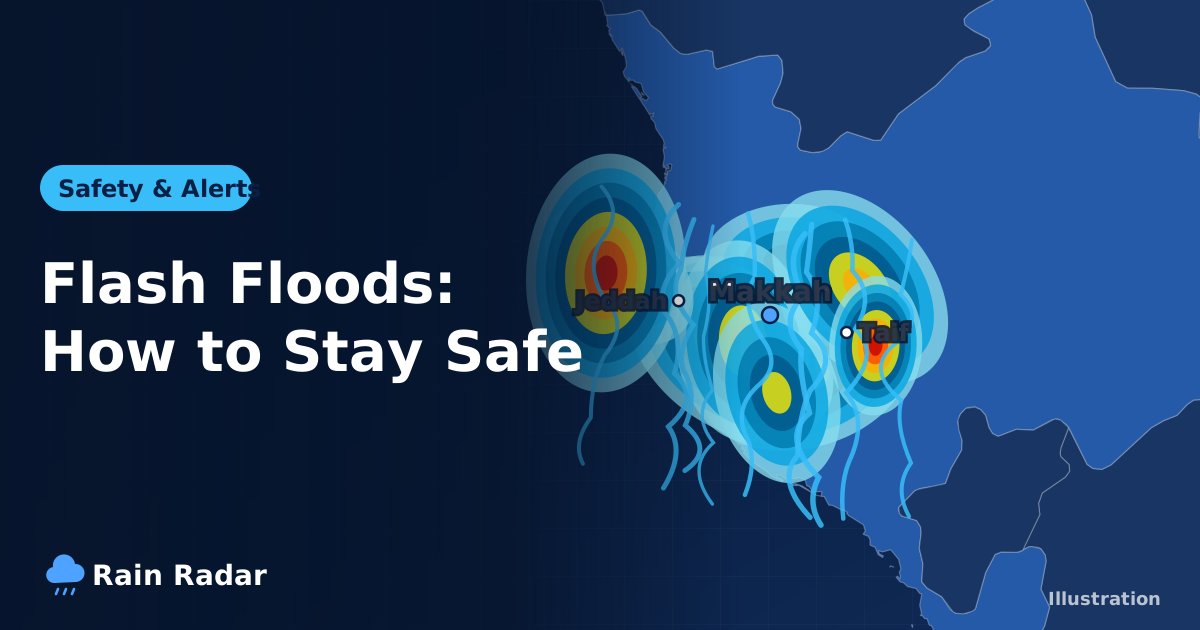
- Never camp in a wadi bed or next to a flood channel, even under a clear sky; floodwater can come from rain far upstream.
- Never cross a flowing wadi by car or on foot, however shallow it looks.
- Watch the radar during your trip if you have mobile data, to spot approaching rain cells.
- Tell a relative where you are going, and carry extra water, food and a charged power bank.
For more on valley dangers, read our flash flood safety guide.
Al-Wasm: folk calendar versus modern forecasts
Al-Wasm has real cultural value, and it describes the general trend reasonably well: autumn brings rising rain chances to Najd and the surrounding regions. What it cannot tell you is whether it will rain in your city tomorrow.
That is the job of modern forecasts built on numerical models, and of radar that detects real rainfall. This site brings both together: observed rain on the live map (RainViewer), 7-day forecast maps (NOAA GFS), and city forecasts (Open-Meteo) for every place in our list of Saudi cities. Official warnings come only from the National Center for Meteorology and Civil Defense.
Enjoy the season and the wait for its rain, but base daily decisions on the data. And if Wasmi rain falls on your land, a green spring is probably on its way.
Frequently asked questions
When does Al-Wasm start?
In the traditional calendar of the Arabian Peninsula, Al-Wasm starts around the middle of October, usually given as about 16 October. It is an inherited, approximate date rather than an official one.
How long does Al-Wasm last?
Al-Wasm traditionally lasts about 52 days, until roughly the start of December, when the cold period called Al-Murabba'aniyah begins. It is divided into four star periods of around 13 days each.
What is the difference between Al-Wasm and Wasmi rain?
Al-Wasm is the name of the season itself, while Wasmi (al-wasmi) describes its rain. Wasmi rain is rain that falls during Al-Wasm, and people link it with good pasture and green desert in the following spring.
Is rain guaranteed during Al-Wasm?
No. Al-Wasm is a time when the chance of rain rises in central, northern and eastern Saudi Arabia, but totals vary a lot from year to year and some Wasm seasons are almost dry.
Is Al-Wasm a good time for desert camping?
Yes, the cooler weather makes Al-Wasm a popular time for desert trips, but storms can make dry valleys flood suddenly. Check the forecast and radar before you go, and never camp in a valley bed.
Sources: the National Center for Meteorology (NCM) for official alerts; RainViewer radar and Open-Meteo forecasts for the data shown on this site.