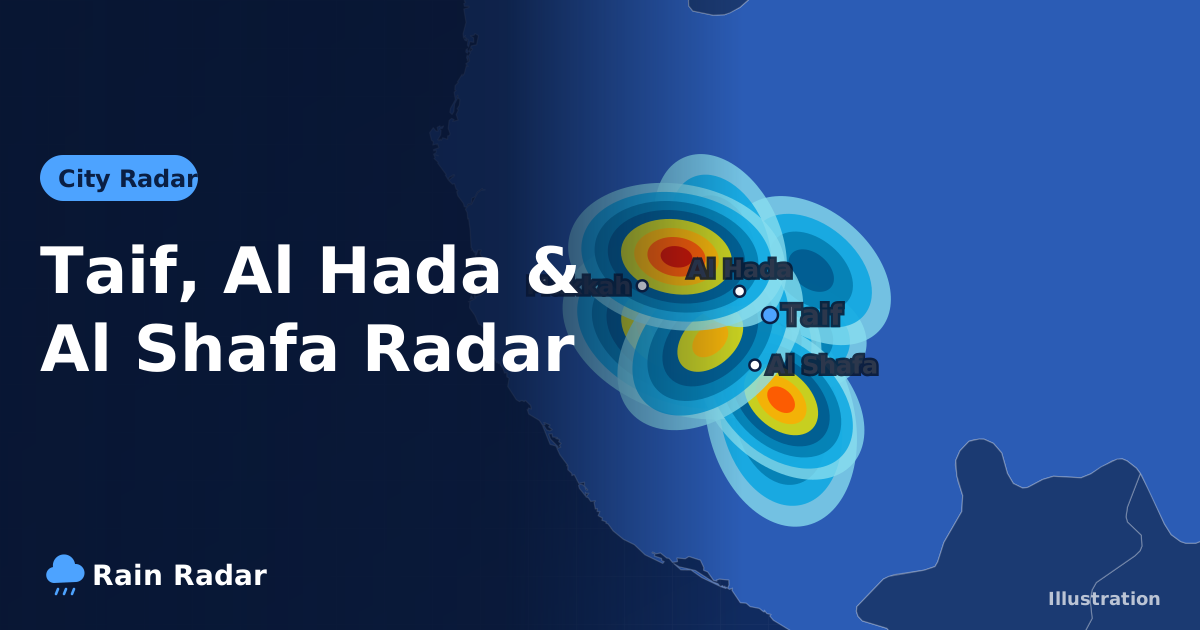
The Taif rain radar lets you see rain over Taif, Al Hada and Al Shafa as it happens: open the live radar and play the last two hours to see where rain clouds are gathering and where they are moving. Taif is known for spring rain and summer thunderstorms that usually build over the highlands in the afternoon, with scattered rain in autumn and winter too.
Thanks to its altitude, Taif is Saudi Arabia's classic summer escape, so its weather matters to residents and to the many families who drive up from Makkah, Jeddah and Riyadh. This guide explains how to follow the radar, when rain is likely, and how to handle summer storms, fog and flash floods on mountain roads.
How do you follow the Taif rain radar live?
The radar shows rain actually observed over the last two hours, split into frames about 10 minutes apart. Press play and you can watch rain cells grow and drift over the mountains and valleys.
- Open the live rain radar and zoom in on Taif, keeping Al Hada, Al Shafa and the road down to Makkah on screen.
- Play the loop and watch the direction of travel; storms in the highlands can form and grow in a short time.
- Read the colours roughly: light sky blue for light rain, blue for moderate, yellow and orange for heavy, and red to pink for very heavy rain, often with thunderstorms.
- Open Taif weather for the current temperature and the hourly and 7-day forecast.
Remember: the radar tells you what is happening now, while the city page shows model forecasts for the hours and days ahead. Using both gives the clearest picture.
Radar limits in the mountains
High terrain around Taif can block part of the radar beam or create fixed echoes that never move and are not real rain. Watch for motion: real rain shifts and changes shape between frames, while ground clutter stays put. In dry air the radar may also show rain that evaporates before reaching the ground, and a small storm can pour on one district only.
When is the rainy season in Taif?
Taif sits on the Sarawat mountains east of Makkah, and its altitude makes it milder than the nearby coast and interior. The same altitude helps clouds form, because warm air rising up the slopes cools and condenses into towering cumulus.
There is no single fixed rainy season. Rain is spread across the year and its strength and frequency change from one year to the next:
| Season (approximate) | Typical weather in Taif |
|---|---|
| Spring | One of the wettest times, with rain events and thunderstorms in mild weather |
| Summer | Warm days and cooler nights; afternoon thunderstorms over the highlands on some days |
| Autumn | Gradually cooler, with a chance of scattered rain |
| Winter | Noticeably cold, especially at night and on higher ground; rain possible with some low-pressure systems |
Winter nights in Taif can get cold by Hejaz standards, and colder still on the surrounding peaks. In summer Taif usually stays well below the temperatures of Makkah and Jeddah, which is a big part of its appeal. Compare it with other cities in our guide to the rainy season in Saudi Arabia.
Al Hada and Al Shafa weather
Al Hada and Al Shafa are two of the Kingdom's best-known summer retreats. Both sit higher than central Taif, so they are usually cooler, and you will want an extra layer in the evening even in summer.
Al Hada
Al Hada lies west of Taif on the edge of the escarpment above the winding road down to Makkah. It often gets fog and low cloud, especially when moist air rises from the west. See Al Hada weather for temperatures and the hourly forecast.
Al Shafa
Al Shafa lies south-west of Taif and is one of the highest inhabited areas around the city, known for its farms and cool air. Thunderstorms build over it on some summer afternoons, so check the radar before a picnic. Al Shafa weather shows the forecast and UV index.
Summer storms and fog on Taif's mountain roads
Highland thunderstorms can bring short bursts of heavy rain, sometimes with hail and strong downdraft winds. Add fog that cuts visibility on mountain roads, above all the Al Hada road linking Taif and Makkah, and driving can become hazardous quickly.
- Open the radar before you set off; if yellow or red cells sit on your route, consider waiting a while.
- In fog, slow down, use dipped headlights and leave a generous gap.
- Do not stop on bends or under rocky slopes during rain.
- Avoid exposed, high ground when there is lightning.
Flash floods around Taif: why caution matters
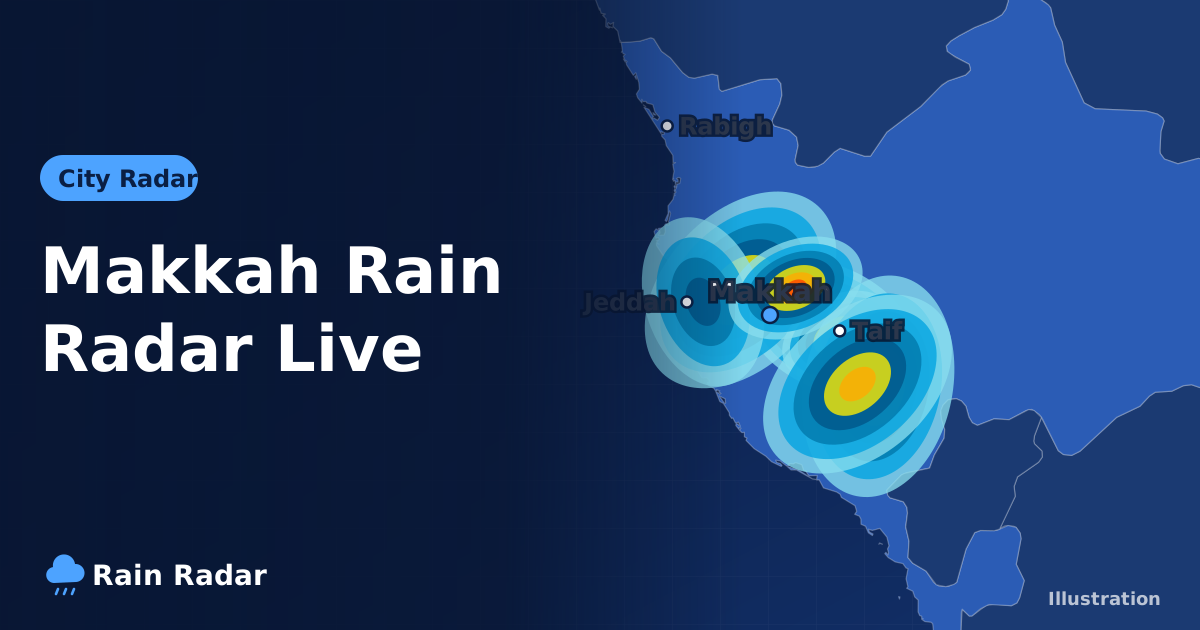
Valleys such as Wadi Wajj run through and around Taif, and they can flow fast after heavy rain on the highlands. Water can also drain west into the valleys heading towards Makkah, which is why Makkah residents watch the Taif radar when clouds build over the mountains.
The danger is that a flood can reach a place where no rain fell, surprising people standing in a valley or trying to drive across it. Watching the radar over nearby high ground, not just over your own spot, is a good habit for anyone travelling between Taif and Makkah or picnicking in the valleys. Also watch for water pooling in tunnels and low streets after heavy rain; it is often deeper than it looks.
The basic rule is simple: never cross a running wadi, and never camp in a valley bed on unsettled days. To see how these events affect the holy city, read our Makkah rain radar guide.
Taif weather in summer: what to check before you go
Many families head to Taif in summer to escape the heat of the coast and the interior. But altitude also means strong sun: you can feel refreshed while the UV index is high. Watching clouds pile up over the mountains in the afternoon is a lovely sight that can quickly turn into heavy rain and lightning, so keep the radar open on your phone and move somewhere safe if cells are approaching and their colours intensify.
- Check the UV index and sunrise and sunset times on the city page to plan outings.
- Plan outdoor activities for the morning, as summer storms tend to form after midday.
- Bring a light jacket for the evening, especially in Al Shafa and Al Hada.
- Check the air quality and dust card if you have allergies.
For more on handling Saudi heat, read summer in Saudi Arabia. Official alerts for Taif come from the National Center for Meteorology (NCM) and safety instructions from Civil Defense; our site shows observed radar and model forecasts only.
Frequently asked questions
How can I check if it is raining in Taif now?
Open the live radar on our home page, zoom in on Taif and press play to see rain over the last two hours in frames about 10 minutes apart. The Taif weather page adds the hourly and 7-day forecast.
When is the rainy season in Taif?
Taif gets rain in more than one season. Spring rain and summer afternoon thunderstorms over the highlands are the best known, but autumn and winter can bring rain too. Amounts vary from year to year.
Why are Al Hada and Al Shafa cooler than Taif city?
Both sit higher than central Taif, and temperature usually falls as altitude rises. That is why many visitors head there to escape the summer heat, and why evenings can feel cool even in summer.
Is the rain radar a substitute for weather alerts in Taif?
No. The radar shows observed rain only and does not issue warnings. Official alerts come from the National Center for Meteorology (NCM) and safety instructions from Civil Defense.
What is the best time to visit Al Shafa and Al Hada in summer?
Mornings are usually calmer, because summer thunderstorms tend to build in the afternoon. Check the hourly forecast and the radar before you set off.
Sources: the National Center for Meteorology (NCM) for official alerts; RainViewer radar and Open-Meteo forecasts for the data shown on this site.